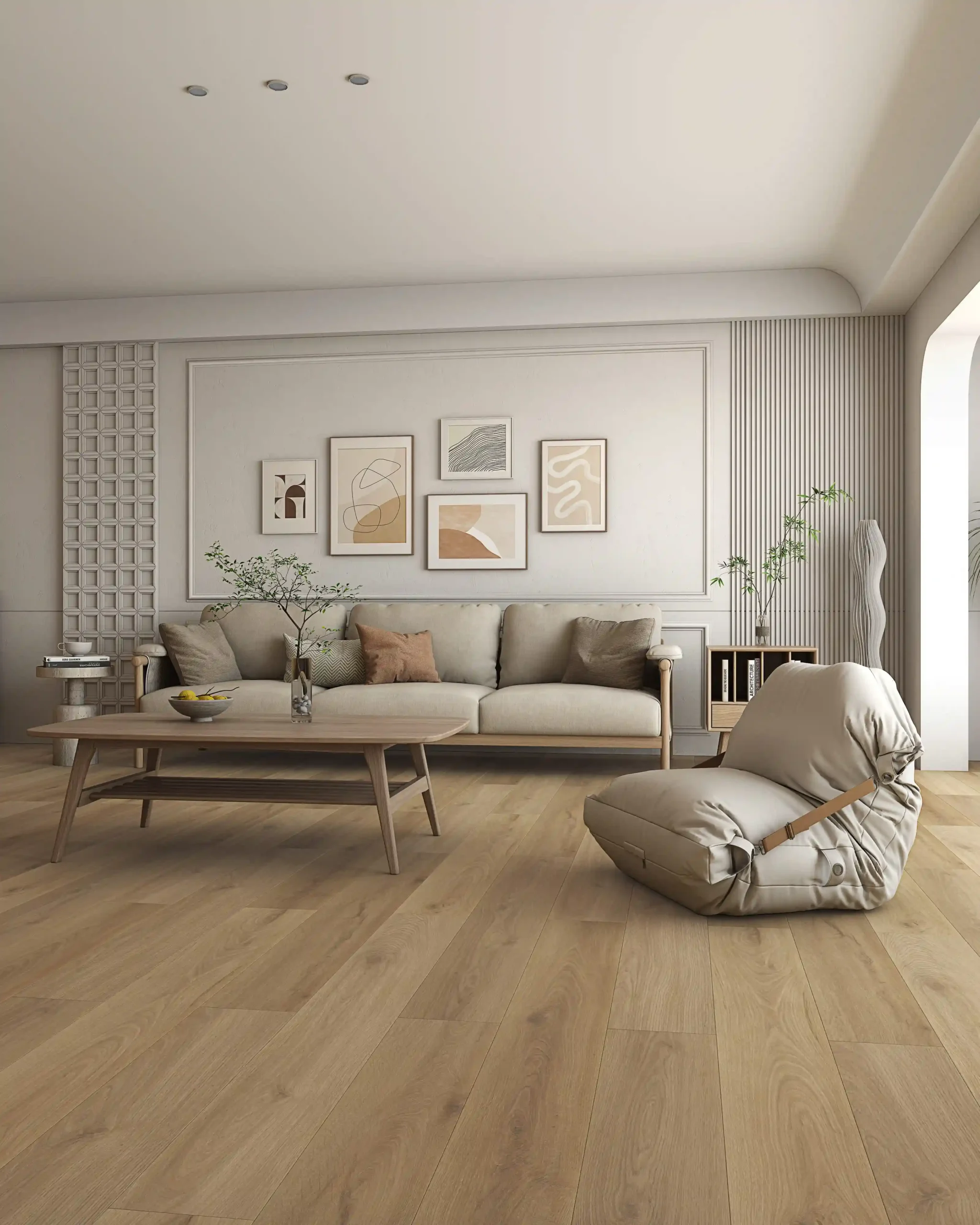
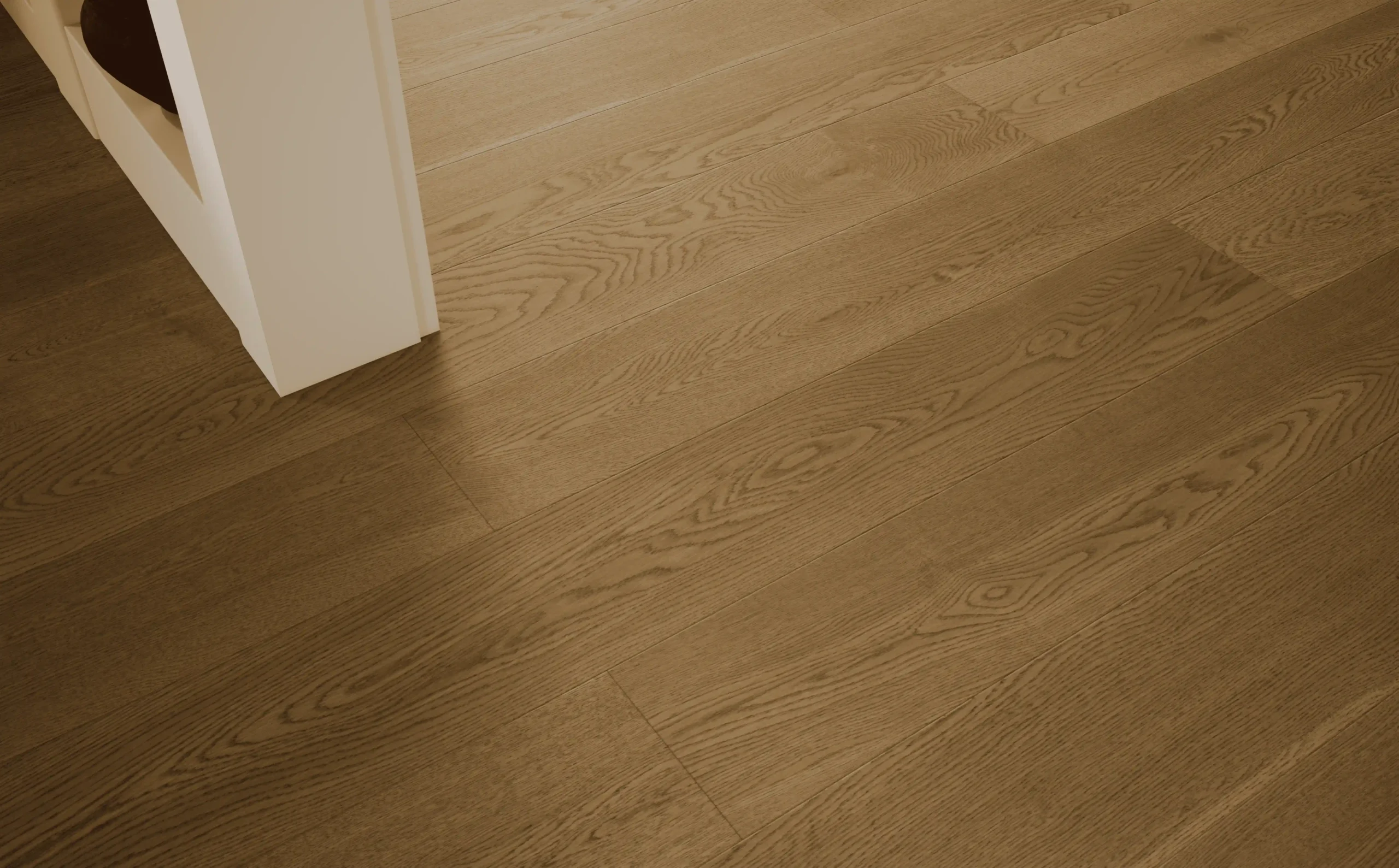

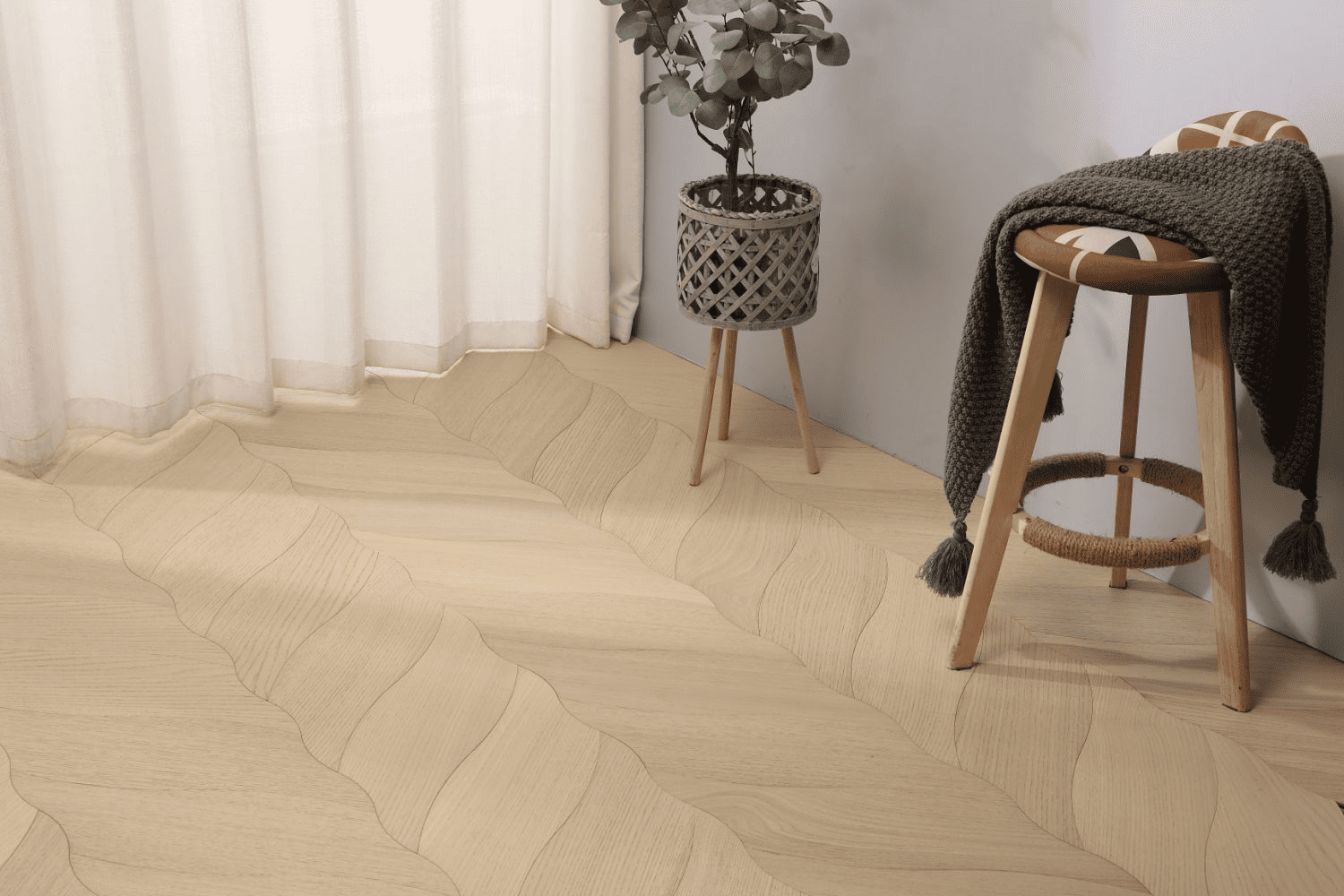


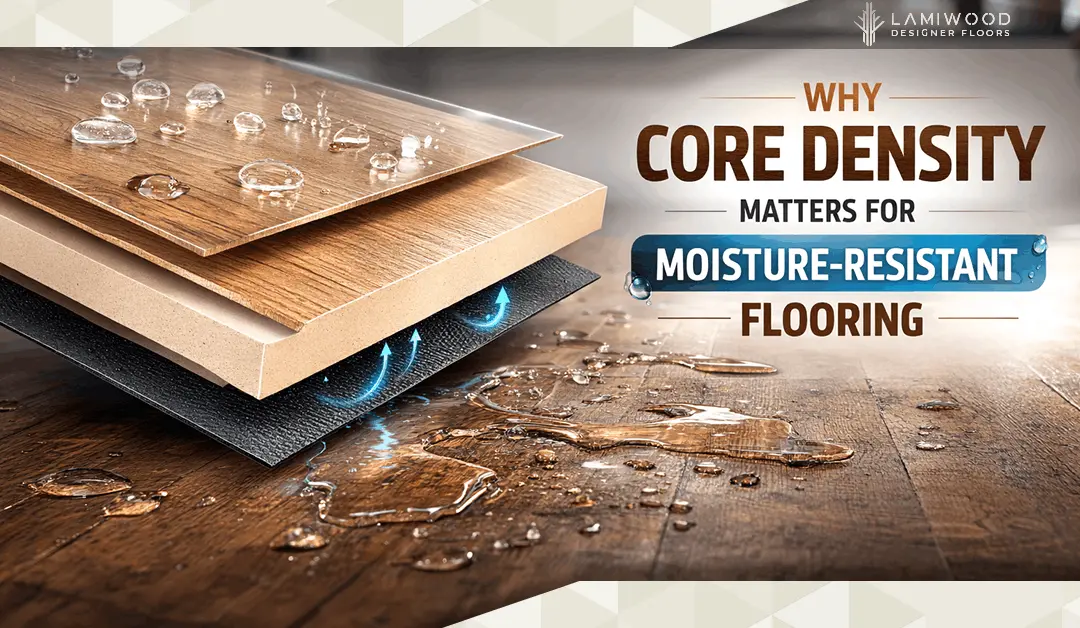
Two floors may look almost identical on the surface, yet perform very differently over time. The reason often lies inside the plank in something called core density.
When choosing flooring, many people naturally focus on visible features like color, grain patterns, or finish. While these elements influence the look of a space, the real performance of flooring depends on what lies beneath the surface.
One of the most important factors is the density of the core layer, which determines how well the flooring resists moisture, maintains stability, and performs over the years of use.
Understanding core density can help homeowners make better flooring decisions and avoid common problems such as swelling, warping, or gaps between planks.
Why Core Density Matters
Core density plays a crucial role in the performance of modern flooring. Flooring with a high-density HDF core offers several important advantages:
- Better moisture resistance
- Reduced swelling and expansion
- Stronger locking systems
- Improved dimensional stability
- Longer floor lifespan
Because of these benefits, high-density cores are commonly used in premium laminate and hybrid flooring products.
Key Takeaway
The moisture resistance of flooring depends heavily on the density of its core layer. Flooring with a high-density HDF core (around 900 kg/m³ or higher) absorbs less moisture, swells less, and provides stronger plank connections. This results in flooring that stays stable, durable, and visually appealing for years.
What Is Core Density in Flooring?
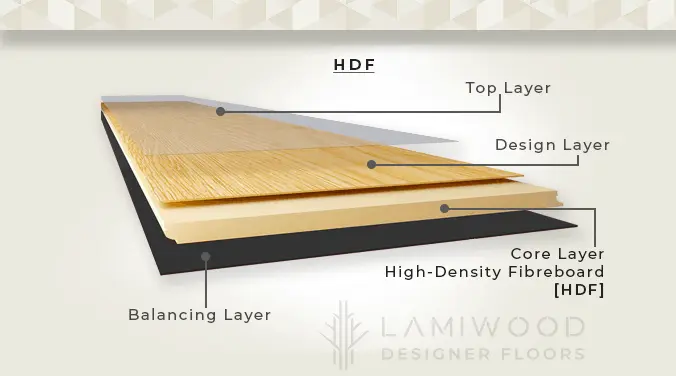
Most modern laminate and engineered flooring products are built in layers. Beneath the decorative top layer lies the core layer, which provides structural strength and stability to each plank.
This core layer is typically made from High-Density Fiberboard (HDF), a material created by compressing wood fibers under high pressure and heat.
Core density refers to how tightly these fibers are compacted together during manufacturing, and it is usually measured in kilograms per cubic meter (kg/m³).
For example:
- High-density cores: around 900 kg/m³ or higher
- Lower-density cores: around 750–800 kg/m³
Although this difference may appear small, it can significantly influence how the flooring performs when exposed to moisture, humidity, and everyday wear.
How Core Density Influences Moisture Resistance
Moisture is one of the biggest challenges for flooring materials. Water can enter the flooring through spills, cleaning, humidity in the air, or even small amounts of seepage.
When moisture reaches the core layer, the wood fibers begin to absorb water and expand. Over time, this can lead to visible problems such as swollen edges, warped planks, or uneven surfaces.
The density of the core layer directly determines how easily moisture can penetrate the flooring.
Tightly Compressed Fibers Absorb Less Moisture
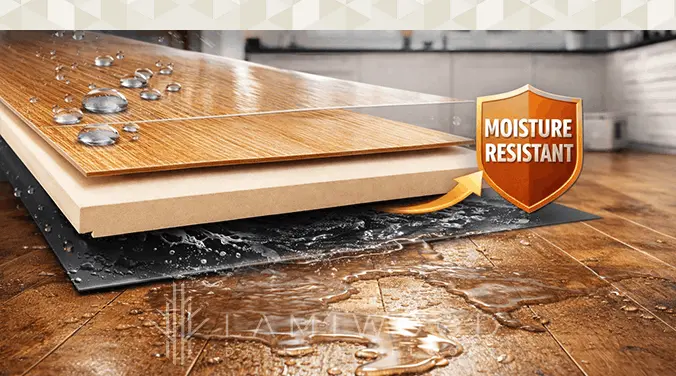
In high-density cores, wood fibers are compressed tightly together, leaving fewer microscopic gaps for moisture to enter.
A simple way to understand this is to imagine two sponges:
- A loose sponge absorbs water quickly.
- A dense sponge absorbs water much more slowly.
Flooring behaves similarly. A high-density HDF core slows down moisture absorption, helping the plank resist water penetration and maintain its shape.
Because of this, flooring with higher-density cores generally offers better moisture resistance and structural reliability.
Reduced Swelling and Expansion
When flooring absorbs moisture, it naturally expands. In lower-density boards, swelling can sometimes reach 20–25% in extreme moisture conditions, which may lead to visible deformation.
High-density cores significantly reduce this risk. Because the fibers are tightly bonded together, they absorb less water and expand much less.
Reduced swelling helps ensure that:
- Planks remain properly aligned
- The surface stays smooth and even
- The floor maintains its original appearance
This makes a noticeable difference in long-term durability and visual consistency.
Better Dimensional Stability
Moisture does not only come from accidental spills. Everyday environmental factors such as humidity changes and seasonal temperature shifts also influence flooring materials.
In many homes, flooring expands and contracts throughout the year as environmental conditions change.
High-density cores provide better dimensional stability, meaning the planks are less likely to expand or shrink dramatically. This helps prevent issues like gaps between planks or uneven surfaces.
Stronger Locking Systems
Most modern laminate and hybrid flooring products use click-lock installation systems, which allow planks to snap together without glue or nails.
These locking systems rely heavily on the strength of the core material.
If the core density is low, the locking edges can become fragile and may break or loosen over time. This can eventually lead to:
- Chipped locking edges
- Loose plank connections
- Visible gaps in the flooring
High-density cores provide stronger structural support, helping the locking systems remain secure and stable for many years.
Real-Life Performance in Busy Homes
Flooring in everyday homes experiences constant activity — from foot traffic and furniture movement to routine cleaning and occasional spills.
In these conditions, flooring with a high-density core performs far more reliably. The tightly bonded fibers protect the internal structure of the plank and help prevent moisture from damaging the flooring.
As a result, homeowners can enjoy floors that remain stable, durable, and visually attractive even in active households.
Why Core Density Is Especially Important in Indian Homes
In many homes, floors are cleaned regularly using water-based mopping, and seasonal humidity changes can also affect flooring materials.
Because of these conditions, moisture resistance becomes particularly important. Flooring with a high-density core absorbs less moisture and is better able to maintain structural stability in humid environments.
Choosing flooring with a strong core can therefore make a significant difference in long-term performance and durability.
Why Premium Flooring Uses High-Density Cores
Not all flooring products are manufactured in the same way. In higher-quality flooring, manufacturers often engineer high-density HDF cores with densities close to or above 900 kg/m³.
This higher density improves moisture resistance while also strengthening the internal structure of the plank.
Premium flooring manufacturers focus heavily on core engineering because the internal construction determines how well the flooring performs over time. A stronger core helps maintain plank alignment, protects locking edges, and reduces swelling caused by moisture exposure.
Brands such as Lamiwood Designer Floors emphasize robust core construction to ensure flooring that combines visual elegance with long-term structural reliability.
How to Identify High-Density Flooring
Since core density cannot be seen on the surface, reviewing product specifications is important before choosing flooring.
Here are a few simple tips:
- Ask about the core density rating (kg/m³)
- Look for flooring with high-density HDF cores around 900 kg/m³
- Check specifications related to swelling resistance
- Choose manufacturers that clearly disclose technical product details
These indicators often reveal the difference between standard flooring products and premium-quality options.
Also Read - 100% Waterproof Flooring Is a Must-Have for Modern Families
The Bottom Line
Beautiful flooring is not just about the design you see; it is also about the engineering inside the plank.
Core density plays a vital role in improving moisture resistance, structural strength, and long-term durability. Flooring with a high-density core absorbs less moisture, expands less, and provides stronger plank connections.
When evaluating flooring options, looking beyond the surface can help ensure your floors remain stable, durable, and beautiful for many years to come.
Explore Premium Flooring Solutions
If you are exploring flooring options that combine beautiful aesthetics with advanced core engineering, explore the premium flooring collections offered by Lamiwood Designer Floors.
Modern flooring technology is designed not only to enhance the appearance of a space but also to deliver long-term durability and reliable performance in real homes.
For a free consultation, reach out at 91+9999500117 Or drop us an email at [email protected]