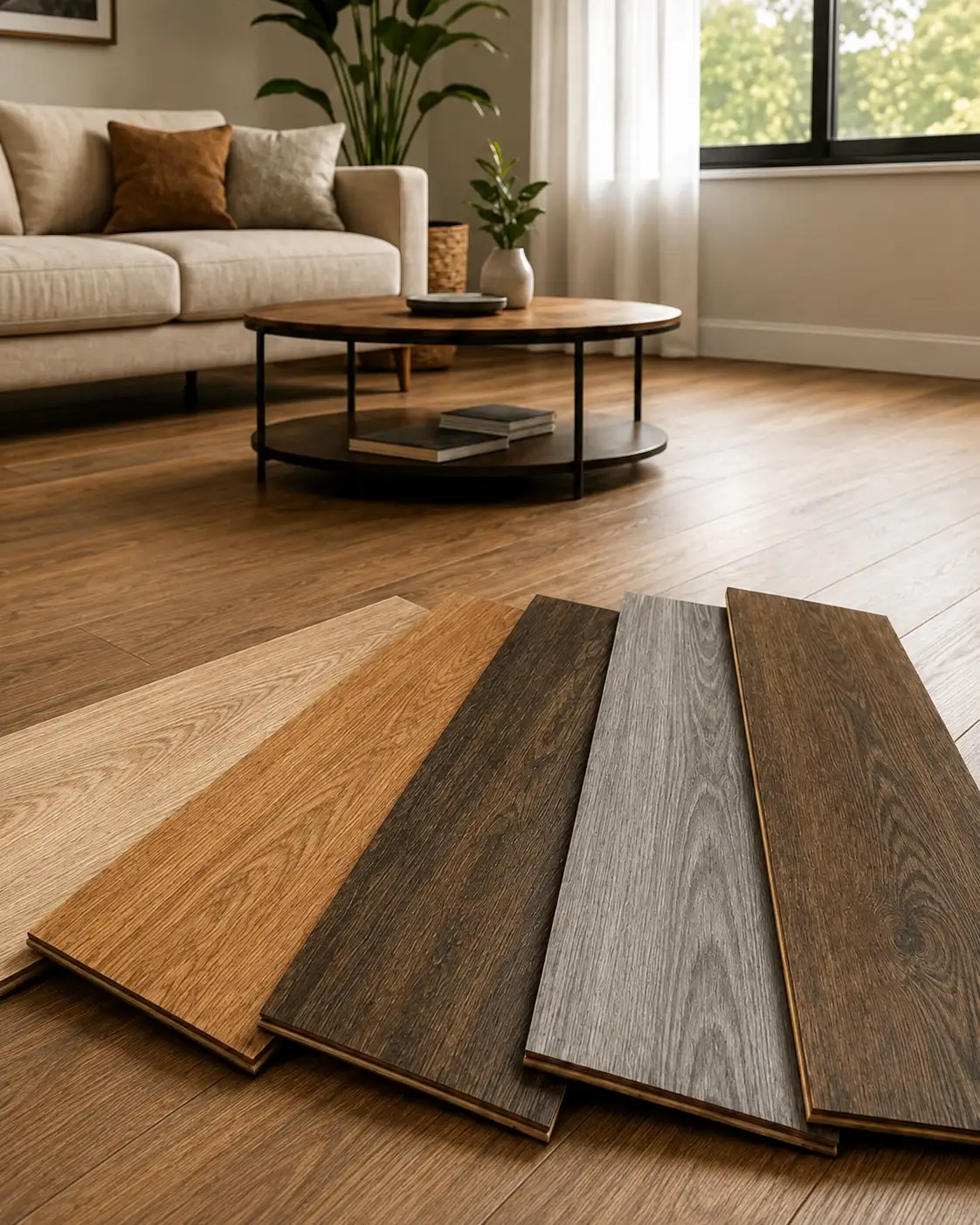
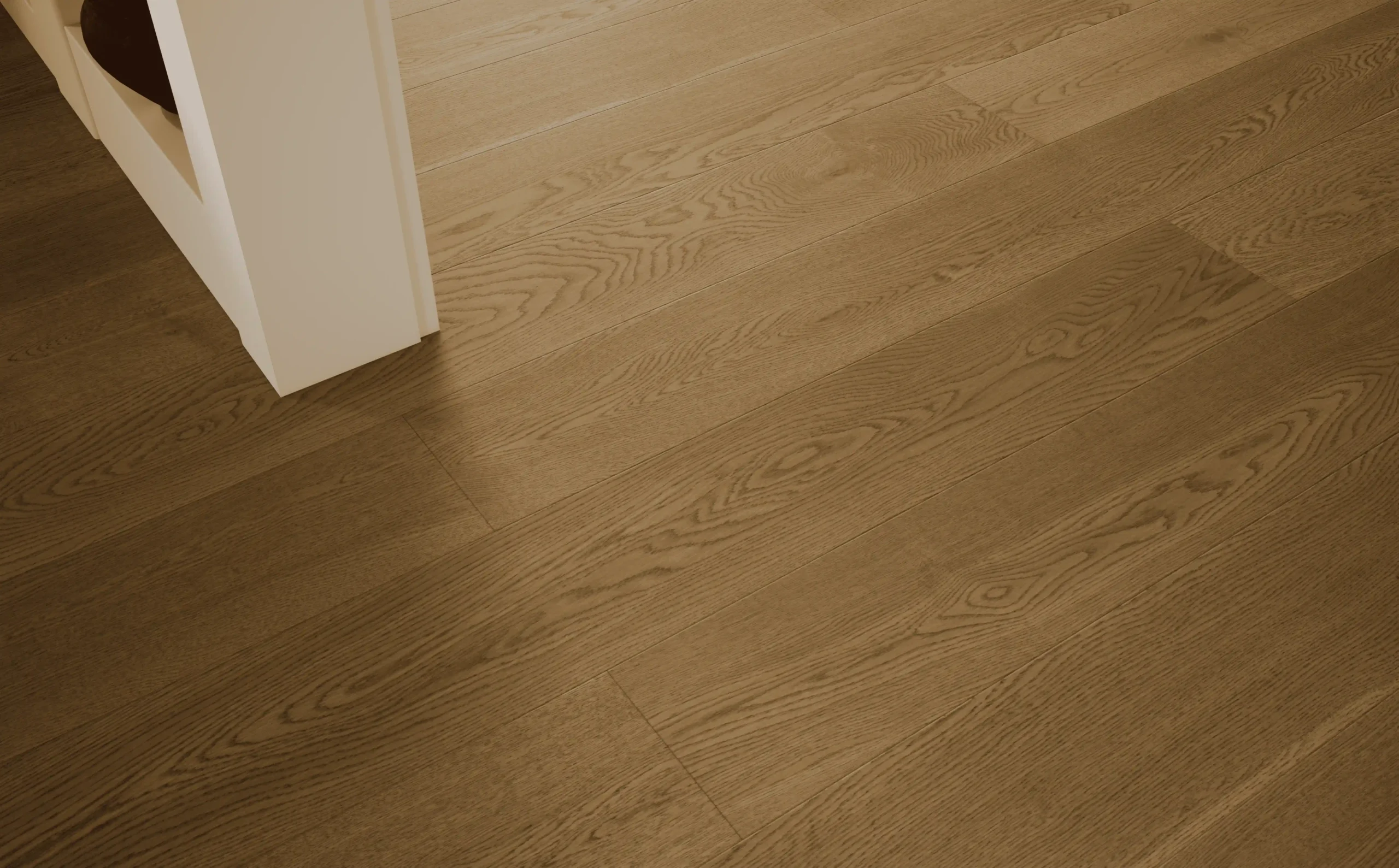

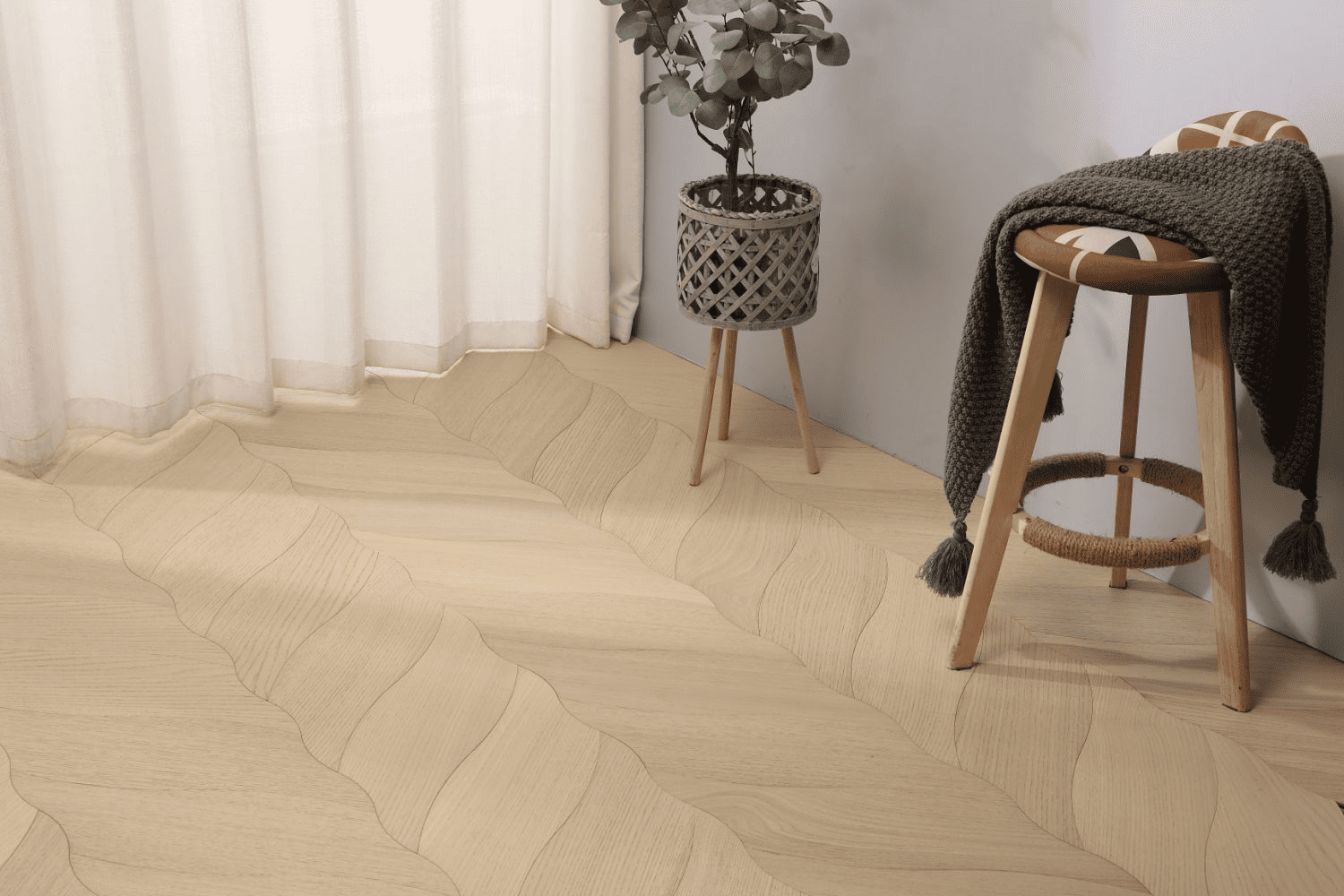



Wooden flooring doesn’t behave the same in every home, and that’s where gaps begin.
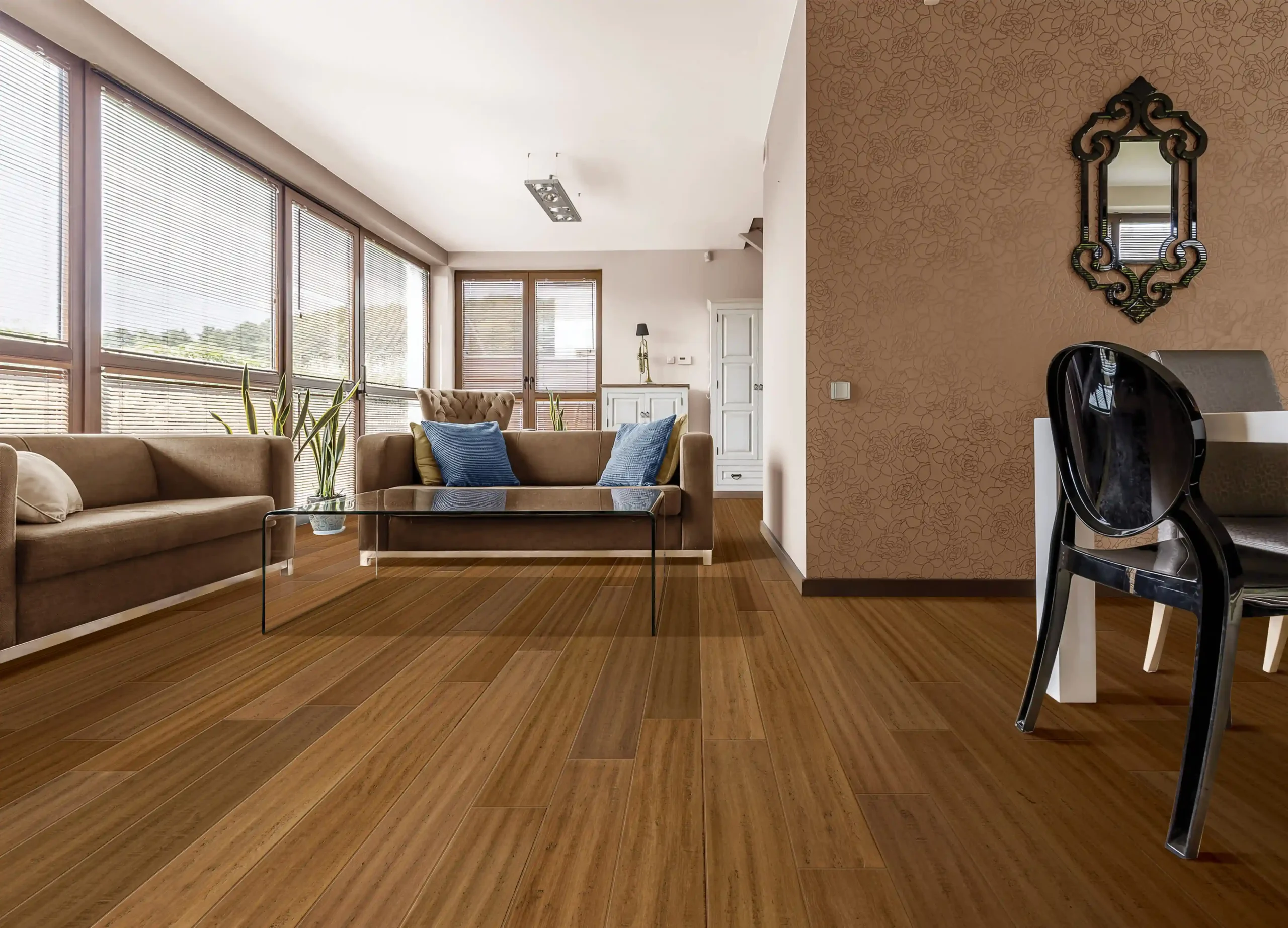
You chose wooden flooring for that smooth, seamless, premium look.
But now you’re noticing thin dark lines forming between the planks, breaking that clean finish.
Frustrating, right?
We see this all the time. In fact, we recently came across a home where perfectly good flooring started showing gaps within just 3 months. Not because the material was bad, but because one small step was skipped during installation.
Here’s the reality. Wood does not fail randomly. It reacts to its environment. And if that reaction is not managed properly, gaps are almost inevitable.
Quick Reality Check
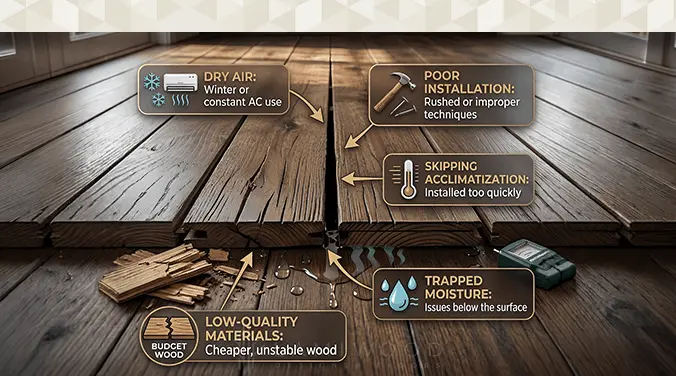
Most flooring gaps come down to a few key factors:
- Dry air from winter or constant AC use
- Rushed or poor installation
- Skipping acclimatization
- Moisture trapped underneath
- Low-quality materials
If you control these, you control the outcome.
Let’s Keep It Simple. Wood Moves
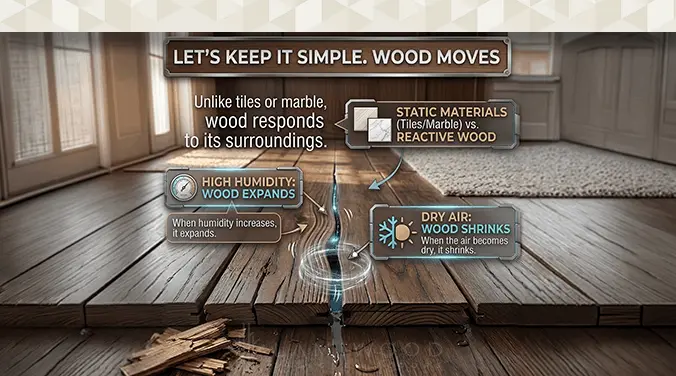
Unlike tiles or marble, wood responds to its surroundings.
When humidity increases, it expands.
When the air becomes dry, it shrinks.
This is when you start seeing fine lines, slight separations, or uneven spacing between planks.
A small amount of movement is natural. Visible gaps usually mean something was not handled correctly.
The Most Common Cause. Dry Air and Seasonal Changes

If you’re in Gurgaon, Delhi, or anywhere in North India, this is something you will notice.
During winters and with heavy AC usage, indoor air becomes dry. The wood loses moisture, shrinks, and fine gaps begin to appear across the floor.
When humidity rises during the monsoon, the flooring expands, and those gaps often reduce.
What this tells you
- The gaps are seasonal
- The flooring is reacting normally
What most people assume
There is something wrong with the flooring.
In many cases, that is not true.
What helps
- Maintain balanced indoor humidity
- Avoid extremely dry AC settings
- Choose engineered wood flooring for better stability
The Mistake That Causes Early Failure. Skipping Acclimatization
If there is one mistake to avoid, it is this.
Before installation, flooring needs time to adjust to your home’s temperature and humidity. This process is called acclimatization.
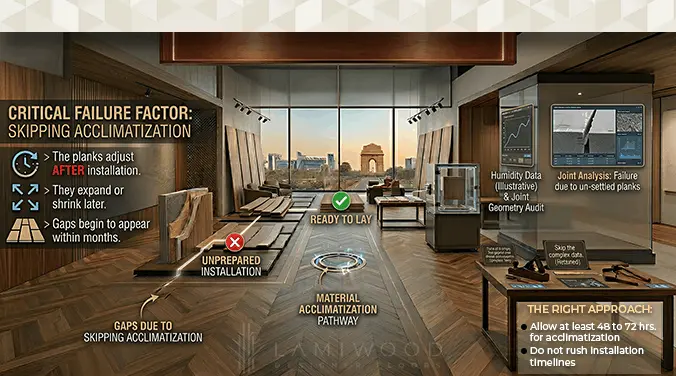
When it is skipped:
- The planks adjust after installation
- They expand or shrink later
- Gaps begin to appear within months
Think of it simply. The flooring was installed before it settled into the environment.
The right approach
- Allow at least 48 to 72 hours for acclimatization
- Do not rush installation timelines
The Hidden Issue. Moisture in the Subfloor
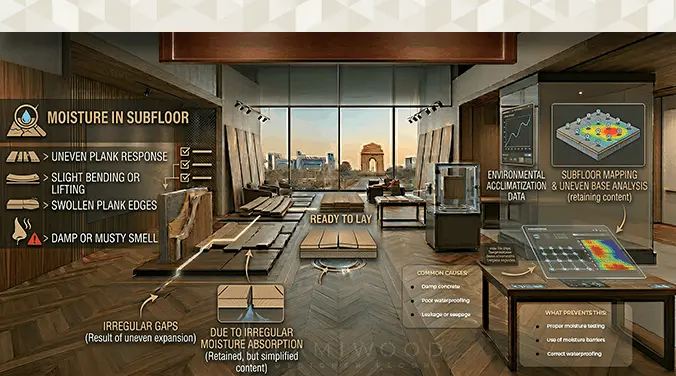
This is where long-term problems usually begin.
If moisture is present in the subfloor, the flooring behaves unevenly. Some planks expand while others do not. This leads to irregular gaps that do not look natural.
Warning signs
- Uneven spacing
- Slight bending or lifting
- Swollen plank edges
- A damp or musty smell
Common causes
- Damp concrete
- Poor waterproofing
- Leakage or seepage
What prevents this
- Proper moisture testing
- Use of moisture barriers
- Correct waterproofing
Installation Quality. Where Most Issues Start
We have seen premium flooring lose its finish simply because it was not installed properly.
Small errors can create long-term problems:
- Planks are not locked tightly
- Uneven base surface
- No expansion space near walls
Over time, these issues turn into visible gaps.
Reality check
Good flooring with poor installation will still fail.
What works
Experienced installers who understand how wood behaves, not just how to lay it.
Material Quality. The Difference Shows Over Time
This is where many people try to save money.
Lower-quality flooring may look fine initially, but over time:
- It shrinks more in dry conditions
- Expands unevenly
- Loses its tight, seamless appearance
What you will notice
Gaps are appearing sooner and looking less uniform
Why do better materials perform well
They are designed for stability and can handle real-world conditions, especially climate variations in India.
AC and Heat Exposure. A Silent Contributor
In cities like Gurgaon, AC usage is constant, and it directly affects wooden flooring.
Continuous dry airflow removes moisture from the wood. Over time, this leads to gradual shrinkage and visible gaps.
What you can do
- Avoid directing airflow straight onto the floor
- Do not use extreme temperature settings
- Maintain balanced indoor conditions
Everyday Habits That Matter
Long-term performance also depends on daily care.
What to avoid
- Excess water while mopping
- Ignoring spills
- Harsh cleaning chemicals
- Dragging heavy furniture
Better habits
- Use a slightly damp mop
- Clean spills immediately
- Use wood-friendly cleaning products
- Maintain proper ventilation
Are Gaps Ever Normal
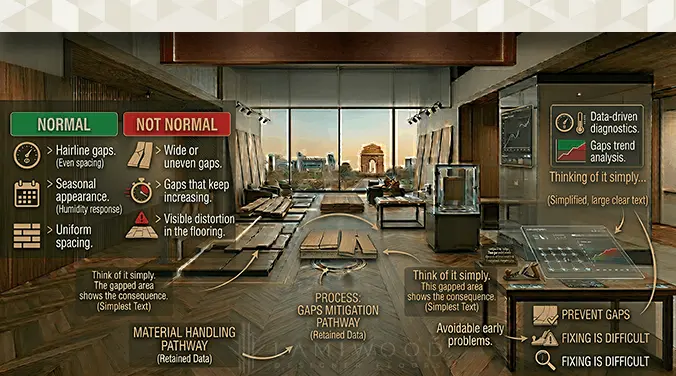
Yes, but only to a certain extent.
Normal
- Hairline gaps
- Even spacing
- Seasonal appearance
Not normal
- Wide or uneven gaps
- Gaps that keep increasing
- Visible distortion in the flooring
If the gaps look irregular or permanent, they should not be ignored.
Also Read: The Ultimate Wood Flooring Guide for Architects
What We Tell Every Customer
The difference between flooring that lasts 10 to 15 years and flooring that starts failing early comes down to three things:
- The material you choose
- The quality of installation
- The environment inside your home
Most people focus only on how the flooring looks on day one. That is where problems begin.
Bottom Line
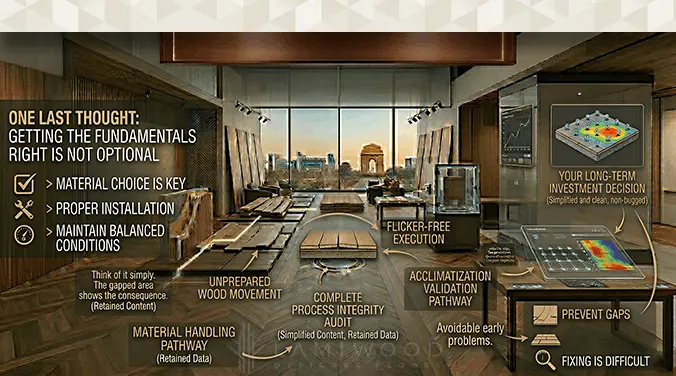
Wooden flooring is a premium investment, and when done right, it performs beautifully for years.
If you choose the right material, ensure proper installation, and maintain balanced indoor conditions, gap-related issues can be avoided.
One Last Thought
If you are planning wooden flooring, getting these fundamentals right is not optional. It is what decides whether your floor continues to look premium or starts showing problems early.
Because once gaps appear, fixing them is always more difficult than preventing them.
For a free consultation, reach out at 91+9999500117 Or drop us an email at [email protected]