



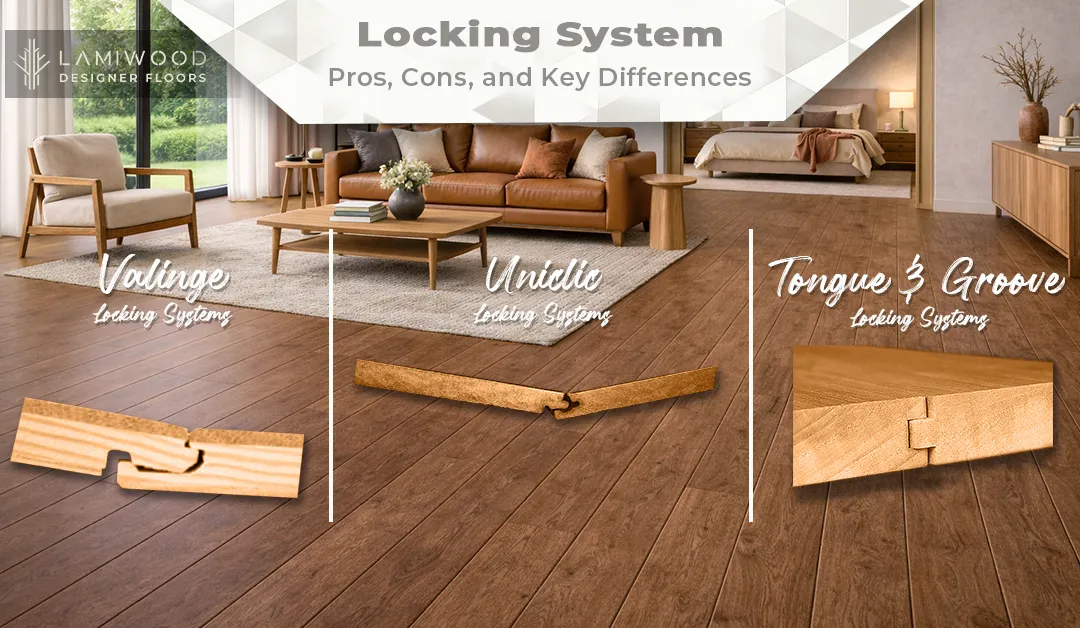
Choosing the right flooring often comes down to the locking system. Even the best-looking plank can be frustrating if the installation is difficult or the floor feels unstable afterward. Three systems tend to come up most often: Välinge, Uniclic, and the classic Tongue and Groove. Each one has strengths, quirks, and ideal uses that matter when planning a remodel or a new installation.
Below is a simple walk-through of how they work, what they’re best suited for, and how to decide which one fits a particular space.
Välinge: Smooth, Modern, and Beginner-Friendly
Välinge locking systems use a mechanical fold-down design that clicks into place with minimal force. Most planks attach by angling one side in and folding the plank downward until it snaps securely. This is helpful during installation in tight areas such as hallways or small bedrooms.
Välinge is often praised for stability, especially when used with wider planks or thicker composite materials like SPC and engineered hardwood. It helps reduce plank movement and makes the entire floor feel firm. Since the clicking motion is gentle, Välinge also works well around doorways, built-in cabinetry, or anywhere a full-angle rotation is awkward.
It’s a good match for DIY installers, floating floors, and situations where precision matters more than speed.
Uniclic: Strong, Reliable, and Ideal for Larger Spaces
Uniclic is one of the most recognizable click-lock systems, known for its angled locking mechanism. The plank is lifted at an angle, slid into the adjoining board, and then pressed down until everything locks tightly together. This technique creates a solid, dependable connection that resists separation.
Uniclic is a favorite for large open areas such as living rooms and dining rooms. The system stays tightly locked, which helps avoid gaps or shifting over time. It’s also great for spaces where floors experience a lot of foot traffic or minor subfloor inconsistencies.
Although very secure, the installation can be a bit more hands-on compared to Välinge. It usually requires tapping blocks or tools to ensure the planks are fully engaged.
Tongue and Groove: Classic, Sturdy, and Best for Glue-Down Setups
Tongue and Groove is the traditional method used long before modern click systems became popular. One plank features a tongue, and the adjacent plank has a matching groove. Fitting them together creates a seamless and sturdy connection. Unlike click-lock systems, this design usually works best with glue, nails, or staples rather than floating installation.
This system shines in places where durability matters: older homes, long-term builds, staircases, and commercial projects. Solid hardwood floors frequently use Tongue and Groove because of the strong, permanent bond it creates.
However, DIY installers often find it more challenging since the process is slower and requires careful alignment.
Which Flooring Locking System Is Easiest to Install?
For beginners or anyone installing flooring alone, Välinge usually feels the most straightforward. The fold-down mechanism requires less force and fewer tools, especially compared to Uniclic’s more involved angle-lock process.
Tongue and Groove tends to demand the most skill. It’s more labor-intensive and better suited for those comfortable with glue or fasteners.
Which System Feels the Most Solid Underfoot?
All three systems can create a durable floor, but the type of project determines the winner.
- Uniclic delivers excellent long-term stability in floating floors.
- Välinge offers a secure fit with easier handling in tight spaces.
- Tongue and Groove provides the strongest structural feel, particularly when glued or nailed.
For floating installations, Uniclic often comes out on top. For permanent installations, Tongue and Groove offers unmatched strength.
Also Read: How to Install Wooden Flooring: A Complete Guide
How to Choose the Right System for Your Space
Here’s a simple breakdown to make the decision easier:
Choose Välinge if:
- The installation is happening in compact or irregularly shaped rooms
- It’s a DIY project with minimal tools
- A quiet, smooth-install click system is preferred
Choose Uniclic if:
- The floor covers a large open area
- Long-term stability in a floating floor is the top priority
- High foot traffic is expected
Choose Tongue and Groove if:
- The goal is a permanent, traditional hardwood installation
- Glue, nails, or staples are part of the plan
- A classic, solid feel is more important than quick installation
Final Thoughts
Every flooring locking system has its strengths, and the “best” choice depends on the installation style, the layout of the room, and the level of experience involved. Välinge keeps things simple and smooth, Uniclic offers dependable strength, and Tongue and Groove provides timeless durability. Understanding the differences makes it easier to choose a system that feels right and performs well for years to come.
For a free consultation, reach out at 91+9999500117 Or drop us an email at [email protected]