


When it comes to flooring, the choices can feel overwhelming, right? Among all the options out there, High-Density Fiberboard (HDF) and Medium-Density Fiberboard (MDF) are two popular picks. But which Wooden Flooring is better for your home? Don’t worry—we’ll break it all down for you so you can make the best decision.
Let’s dive in and explore what makes HDF vs MDF flooring unique, how they differ, and which one might be your perfect match.
What is HDF Flooring?
First things first, what exactly is HDF flooring?
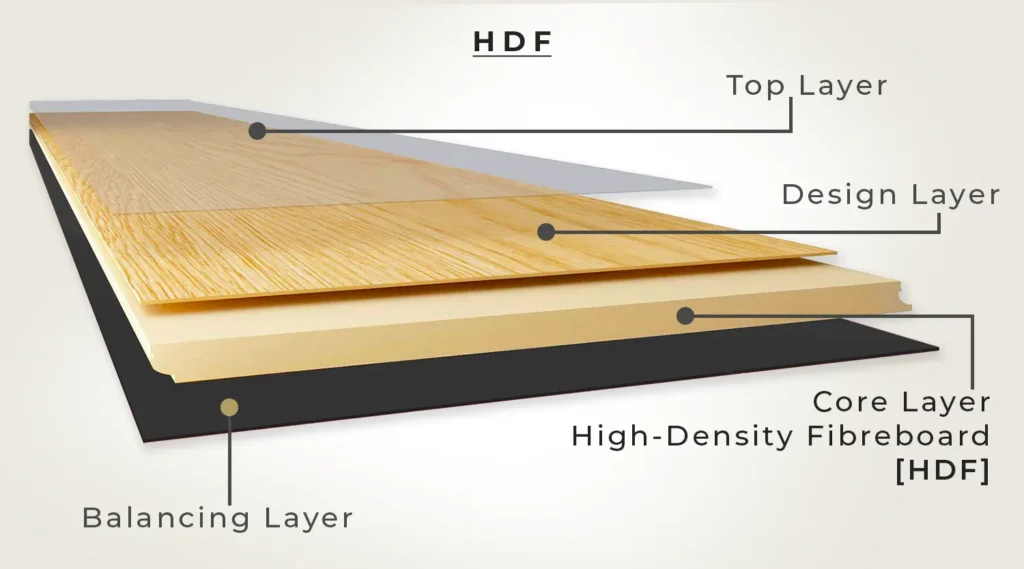
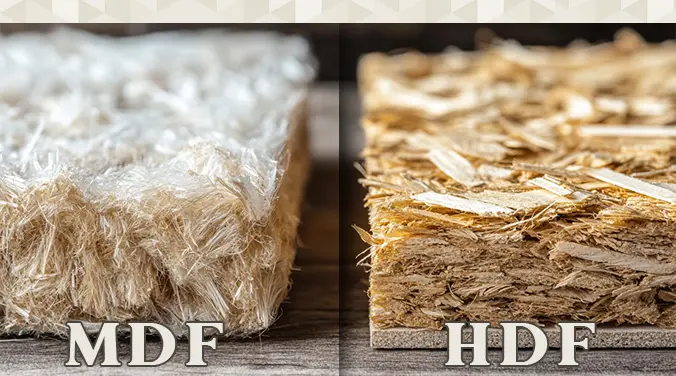
HDF, or High-Density Fiberboard, is made by compressing wood fibers, resin, and wax under high pressure and heat. This process creates a super-dense and strong material. You’ll often find HDF used as the core layer in engineered wood and laminate flooring. Why? Because it’s tough as nails and built to last!
Why Do Most Premium Laminate Floors Use HDF Cores?
When exploring modern laminate flooring options, you'll notice that most premium collections are built using HDF (High-Density Fiberboard) cores rather than MDF. This is because HDF offers greater structural strength and durability, making it better suited for the demands of everyday residential and commercial spaces.
A high-density core helps flooring withstand furniture movement, foot traffic, and minor impacts without compromising stability. It also creates stronger click-lock joints, reducing the chances of gaps forming between planks over time.
For homeowners seeking long-lasting performance, dimensional stability, and better resistance to daily wear and tear, HDF remains the preferred core material used in high-quality laminate flooring.
What Makes HDF Flooring Special?
Incredible Strength: HDF has a density of over 800 kg/m³, making it durable enough to handle heavy foot traffic. Perfect for busy homes!
- Moisture Resistance: Many HDF options come treated to resist water and humidity—a big win for kitchens and entryways.
- Smooth Surface: Its even texture makes it ideal for laminates or veneers.
- Eco-Friendly: Love the planet? HDF is made from recycled wood fibers, so you’re making a greener choice.
- Where It Works Best: Think living rooms, hallways, or even commercial spaces with lots of foot traffic.
Why Does Density Matter in Flooring?
When comparing HDF and MDF flooring, density is one of the most important factors to consider. Density refers to how tightly the wood fibers are compressed during manufacturing.
The higher the density, the stronger and more durable the flooring core becomes.
A high-density core offers several advantages:
✔ Better resistance to dents and impacts
✔ Improved load-bearing capacity for heavy furniture
✔ Stronger locking systems
✔ Greater dimensional stability
✔ Better performance in high-traffic areas
Because HDF flooring has a higher density than MDF flooring, it generally performs better in living rooms, offices, retail spaces, and other areas where durability is a priority.
What About MDF Flooring?

Now, let’s talk about MDF flooring.
MDF stands for Medium-Density Fiberboard. It’s made using a similar process to HDF but with less compression, which makes it lighter and less dense. MDF is often used in furniture, but it’s also an option for flooring in low-traffic areas.
Why Choose MDF Flooring?
- Lower Density: MDF is lighter with a density between 600-800 kg/m. That means it’s not as tough as HDF but still works for certain spaces.
- Affordable: Budget-friendly and easy on the wallet.
- Smooth Finish: Like HDF, MDF’s surface is great for laminates and veneers.
- Moisture Sensitivity: Be cautious—MDF doesn’t handle water well and can swell if exposed.
Best Spots: Bedrooms, study rooms, or areas with minimal wear and tear.
Also Read: HDF Laminate Flooring? Importance And Advantages
HDF vs. MDF Flooring: What’s the Difference?
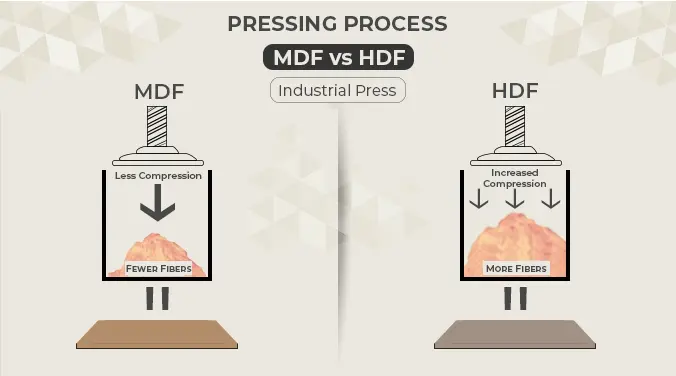
Okay, here’s where we get into the nitty-gritty. Let’s compare HDF and MDF flooring side by side.
| Feature | HDF | MDF |
|---|---|---|
| Strength | Stronger and more durable | Relatively less strong |
| Weight | Heavier | Lighter compared to HDF |
| Moisture Resistance | Better moisture resistance | Susceptible to moisture |
| Applications | Ideal for flooring, high-traffic areas, and furniture requiring durability | Best for interior furniture, cabinets, and decorative applications |
| Finish | It offers a smooth finish but is less robust than HDF | Offers a smooth finish but is less robust than HDF |
| Durability | High durability, suitable for heavy-duty use | Moderate durability for low to medium use |
| Surface Strength | Less prone to dents and scratches | More prone to dents and scratches |
| Workability | Harder to cut and shape due to its density | Easier to cut and shape |
| Usage in Flooring | Commonly used in premium engineered wood flooring | It provides a smoother finish for laminates and veneers |
HDF vs MDF Flooring at a Glance
| Feature | HDF Flooring | MDF Flooring |
|---|---|---|
| Density | High | Medium |
| Durability | Excellent | Moderate |
| Impact Resistance | Better | Good |
| Moisture Resistance | Better | Lower |
| Locking Strength | Stronger | Moderate |
| Lifespan | Longer | Shorter |
| Best For | High-Traffic Areas | Low-Traffic Areas |
This quick comparison highlights why HDF flooring is often considered the superior choice for homes and commercial spaces that experience regular daily use.
How Long Does HDF Flooring Last Compared to MDF Flooring?
One of the biggest questions homeowners ask is how long their flooring investment will last.
While actual lifespan depends on factors such as maintenance, foot traffic, moisture exposure, and installation quality, HDF flooring generally delivers a longer service life due to its higher density and stronger construction.
| Flooring Core | Expected Lifespan* |
|---|---|
| HDF Flooring | 15–25 Years |
| MDF Flooring | 8–15 Years |
*Actual lifespan may vary depending on product quality, maintenance practices, and usage conditions.
For homeowners looking for a long-term flooring solution, HDF flooring often provides better value over time despite its slightly higher initial cost.
So, Which One is Best for Your Home?
Choosing between HDF and MDF depends on your needs, lifestyle, and budget. Let’s make it simple:
- Think About Durability:
Got kids, pets, or lots of visitors? Go for HDF. It’s built to handle high traffic without breaking a sweat.
If you’re flooring a guest room or home office, MDF might do the trick since those areas see less wear.
- Consider Moisture:
HDF wins here, hands down. It’s more resistant to humidity and waterproof laminate flooring. making it perfect for kitchens and entryways.
MDF? Not so much. Keep it away from areas prone to spills or dampness.
- What’s Your Budget?
On a tight budget? MDF is your friend. It’s easier on your wallet and works well in low-traffic zones.
If you’re thinking long-term value, though, HDF is worth the extra cost. You’ll save on repairs and replacements in the future.
- Love Long-Lasting Aesthetics?
Both HDF and MDF look great when paired with laminates or veneers. But HDF’s durability means that a good look lasts much longer.
- Eco-Conscious?
Both materials are made from recycled wood fibers, so you’re making an eco-friendly choice either way. But HDF’s longer lifespan means less waste over time.
Which Rooms Are Best for HDF and MDF Flooring?
Different rooms place different demands on flooring. Choosing the right core material can improve durability and overall performance.
| Room | Recommended Core |
|---|---|
| Living Room | HDF |
| Dining Room | HDF |
| Bedroom | HDF or MDF |
| Home Office | MDF or HDF |
| Retail Store | HDF |
| Hotel Room | HDF |
| Children's Room | HDF |
| High-Traffic Areas | HDF |
As a general rule, HDF flooring is better suited for spaces that experience heavy foot traffic, while MDF flooring can be a practical choice for quieter, low-traffic rooms.
What Should You Check Before Buying HDF or MDF Flooring?
Choosing flooring involves more than simply comparing HDF and MDF cores. Before making a decision, consider the following factors:
Core Density
Higher-density cores generally offer better durability and stability.
Thickness
Thicker flooring can improve comfort underfoot and reduce sound transmission.
Wear Layer Rating
Check the AC rating to understand how well the flooring will withstand daily use.
Moisture Resistance
Look for flooring designed to handle occasional spills and humidity.
Locking System Quality
A strong locking system contributes to easier installation and long-term stability.
Warranty Coverage
A comprehensive warranty often reflects the manufacturer's confidence in product quality.
Brand Reputation
Choose a trusted flooring brand with proven product performance and customer support.
Evaluating these factors can help ensure that your flooring investment delivers lasting value and satisfaction.
Also Know About: Best Quality Laminate Flooring In India
The Bottom Line:
Pick HDF Flooring if you want durability, moisture resistance, and a solution that can handle heavy traffic.
Pick MDF Flooring if you’re on a budget and need something for low-traffic, low-risk spaces.
Common Myths About HDF and MDF Flooring
Myth 1: HDF Flooring Is Completely Waterproof
Reality: HDF flooring offers improved moisture resistance compared to MDF, but it is not inherently waterproof.
Myth 2: MDF Flooring Is Low Quality
Reality: MDF flooring can perform well in low-traffic residential spaces when manufactured to high standards and properly maintained.
Myth 3: All Laminate Flooring Cores Are the Same
Reality: Core density varies significantly between products and plays a major role in durability, stability, and lifespan.
Myth 4: Higher Density Only Increases Weight
Reality: Higher density improves strength, impact resistance, locking performance, and overall flooring durability.
Expert Recommendation
If your priority is long-term durability, better resistance to daily wear, and improved structural stability, HDF flooring is generally the smarter choice. Its higher density makes it better equipped to handle furniture movement, foot traffic, children, and pets.
MDF flooring can still be a suitable option for low-traffic areas where budget is a primary consideration. However, for most modern homes, HDF flooring provides greater peace of mind and long-term value.
Wrapping It Up
Choosing the right flooring doesn’t have to be a headache. HDF and MDF both have their strengths, but understanding your needs is key. HDF stands out for its durability and moisture resistance, making it ideal for high-traffic areas. Meanwhile, MDF offers an affordable option for spaces with minimal wear and tear.
If you’re still unsure, why not check out Lamiwood Designer Floors? They offer a range of premium HDF and MDF flooring options and have experts ready to help you find the perfect fit for your home.
Frequently Asked Questions About HDF and MDF Flooring
For most residential and commercial applications, HDF flooring is generally considered the better option because it offers higher density, greater durability, and stronger locking systems.
No. HDF flooring is moisture-resistant but not completely waterproof. The overall water resistance depends on the flooring construction, surface layer, and edge protection technology.
Yes, MDF flooring can be used in living rooms with light to moderate traffic. However, HDF flooring is usually recommended for better long-term durability.
HDF flooring is often preferred because its higher density provides improved stability and resistance to changing environmental conditions.
In most cases, yes. Higher-density flooring typically offers better resistance to wear, impacts, and structural movement, which can contribute to a longer lifespan.
For homeowners seeking durability, stability, and long-term performance, HDF flooring is often worth the additional investment.
Ready to elevate your space? Let’s get started!
For a free consultation, reach out at 91+9999500117 Or drop us an email at Info@lamiwood.in