


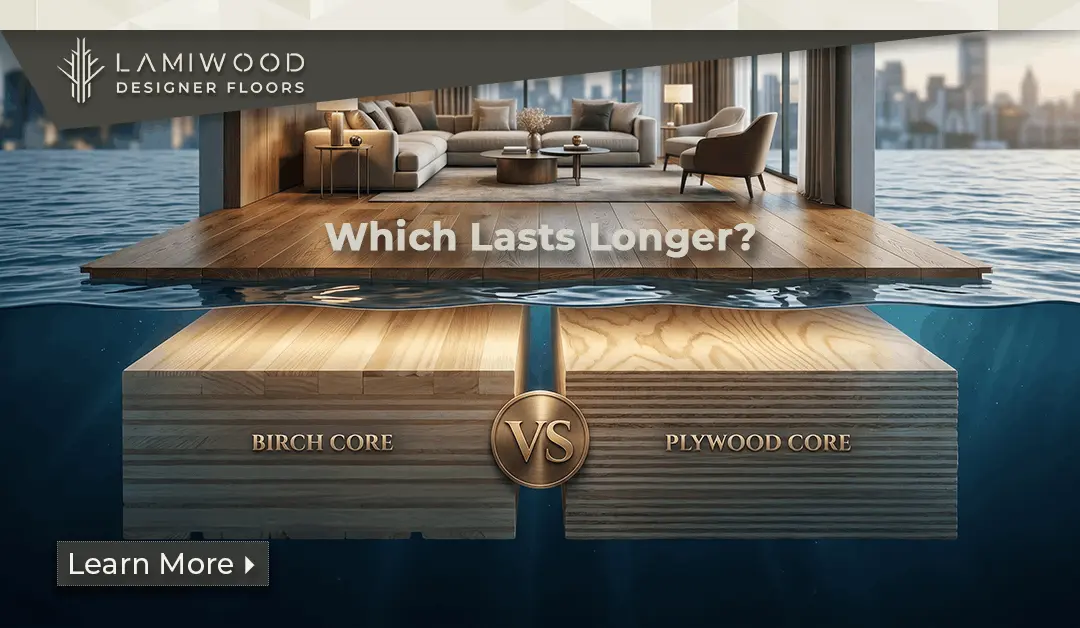
Most Homeowners Focus on the Surface, But Is the Core What Really Determines Flooring Lifespan?
When shopping for engineered wood flooring, most homeowners spend their time comparing wood species, colors, finishes, textures, and plank sizes. While these factors influence how the floor looks, they don't necessarily determine how well it will perform 10, 20, or even 30 years from now.
The component that often has the greatest impact on long-term performance is hidden beneath the surface, the core.
The core acts as the structural foundation of engineered flooring. It influences stability, moisture resistance, strength, durability, and the floor's ability to withstand daily wear and changing environmental conditions.
This is why understanding the difference between birch core and plywood core engineered flooring is so important. While both options offer advantages, they are built differently and can perform differently over time.
So, if you're investing in engineered flooring and wondering which core is likely to last longer, this guide will help you make a more informed decision.
What Are Homeowners Really Looking for When Comparing Flooring Cores?
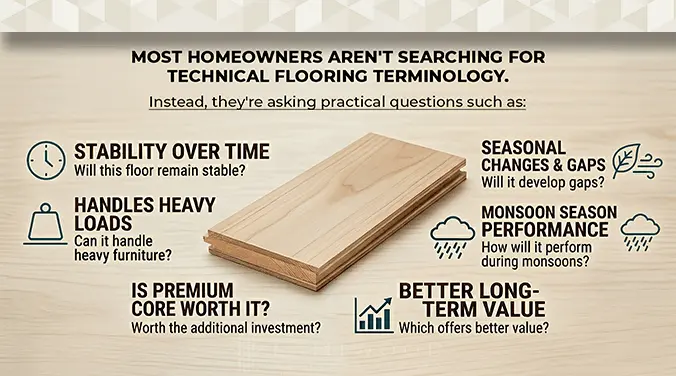
Most homeowners aren't searching for technical flooring terminology.
Instead, they're asking practical questions such as:
- Will this floor remain stable over time?
- Can it handle heavy furniture?
- Will it develop gaps during seasonal changes?
- How will it perform during India's monsoon season?
- Is a premium core worth the additional investment?
- Which option offers better long-term value?
The answers to these questions often depend on what's underneath the hardwood surface.
What Is the Difference Between Birch Core and Plywood Core Engineered Flooring?
Engineered wood flooring consists of multiple layers.
The top layer is made from real hardwood, while the layers beneath create the core structure that provides strength and stability.
What Is Birch Core Engineered Flooring?
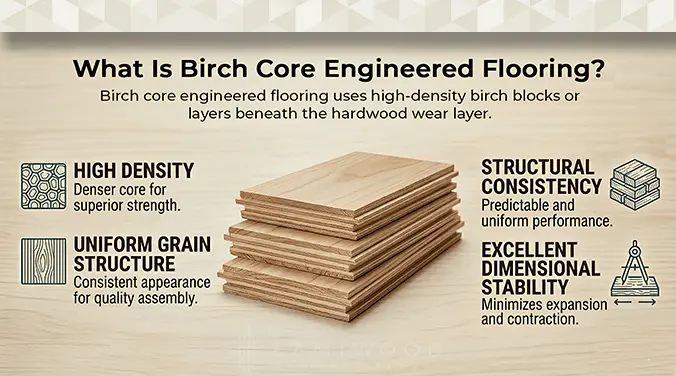
Birch core engineered flooring uses high-density birch blocks or layers beneath the hardwood wear layer.
Birch is a hardwood species known for:
- High density
- Uniform grain structure
- Structural consistency
- Excellent dimensional stability
Because of these characteristics, birch is frequently used in premium engineered flooring collections where long-term performance is a priority.
What Is Plywood Core Engineered Flooring?
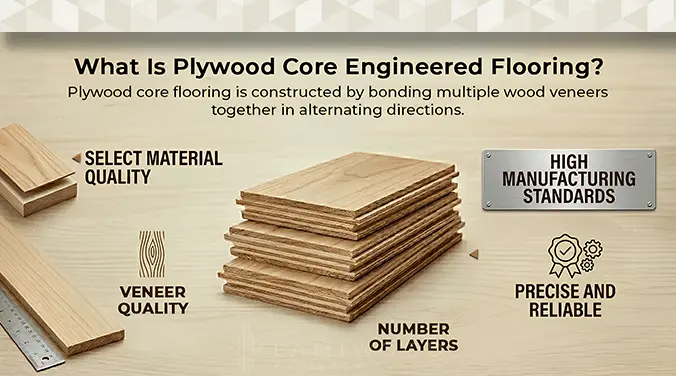
Plywood core flooring is constructed by bonding multiple wood veneers together in alternating directions.
This cross-layer construction helps reduce natural wood movement and improves stability compared to solid hardwood flooring.
The performance of plywood core flooring often depends on:
- Veneer quality
- Number of layers
- Manufacturing standards
- Adhesive technology
Both constructions improve flooring performance, but their long-term characteristics can differ significantly.
Why Does the Core Material Determine the Lifespan of Engineered Flooring?
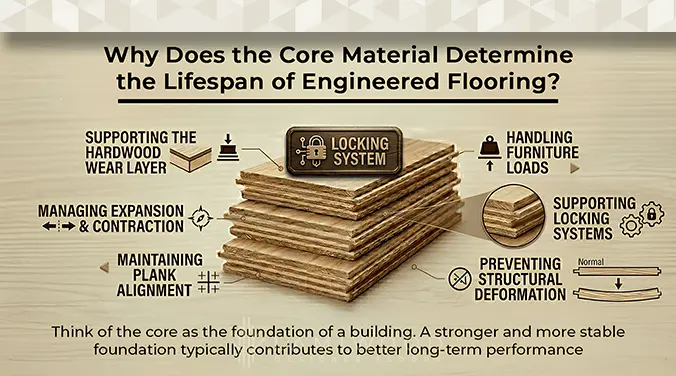
Many people assume that the hardwood veneer determines how long engineered flooring will last.
In reality, the core often plays an even bigger role.
The core is responsible for:
- Supporting the hardwood wear layer
- Managing expansion and contraction
- Maintaining plank alignment
- Handling furniture loads
- Supporting locking systems
- Preventing structural deformation
Think of the core as the foundation of a building. A stronger and more stable foundation typically contributes to better long-term performance.
Why Does Core Density Matter in Everyday Life?
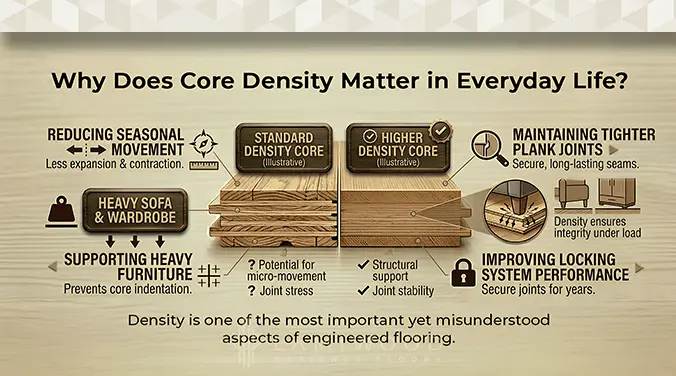
Density is one of the most important yet misunderstood aspects of engineered flooring.
Homeowners rarely ask about density, but they often notice the benefits it provides.
A higher-density core can help:
- Reduce seasonal movement
- Maintain tighter plank joints
- Support heavy furniture
- Improve locking system performance
- Enhance long-term stability
For example, imagine placing a large sofa, dining table, or wardrobe on your floor. A denser core is generally better equipped to handle that weight while maintaining structural integrity.
How Does Birch Density Compare to Common Plywood Materials?
Density varies depending on the wood species and manufacturing process.
The table below provides a general comparison.
| Material | Approximate Density Range |
|---|---|
| Birch Core | 600–700 kg/m³ |
| Mixed Hardwood Plywood | 500–650 kg/m³ |
| Pine-Based Plywood | 400–550 kg/m³ |
While density alone does not determine flooring quality, it can influence strength, stability, and long-term performance.
Which Core Offers Better Dimensional Stability in Indian Weather Conditions?
India's climate can be challenging for wood flooring.
Throughout the year, flooring may experience:
- Monsoon humidity
- Dry winter conditions
- Air-conditioned interiors
- High summer temperatures
These fluctuations cause wood to expand and contract.
Know More: Best Engineered Wood Flooring for Different Climates
How Does Birch Core Perform?
Birch's dense and uniform structure helps minimize movement caused by environmental changes.
This often contributes to:
- Better plank alignment
- Reduced seasonal gaps
- Improved shape retention
- Enhanced long-term stability
How Does Plywood Core Perform?
Plywood controls movement through its cross-layered construction.
Premium plywood cores can provide excellent stability, but performance often depends on manufacturing quality.
For homes located in regions with significant humidity fluctuations, birch core is often favored for its consistency.
Which Flooring Core Is More Resistant to Moisture and Humidity?
Moisture is one of the biggest challenges for any wood-based flooring product.
Whether it comes from spills, humidity, or subfloor moisture, excessive exposure can affect flooring performance.
Why Does Moisture Resistance Matter?
Poor moisture management can contribute to:
- Swelling
- Gaps
- Cupping
- Delamination
- Reduced lifespan
How Does Birch Core Handle Moisture?
The dense structure of birch helps slow moisture absorption and maintain dimensional stability.
This can contribute to:
- Better shape retention
- Reduced movement
- Improved long-term performance
How Does Plywood Core Handle Moisture?
High-quality plywood performs well under normal indoor conditions and offers good moisture resistance through its layered construction.
However, performance may vary depending on the quality of the materials used.
Can Birch Core Flooring Better Prevent Gaps, Cupping, and Warping?
One of the most common homeowner concerns is flooring movement.
Seasonal changes can cause flooring to expand and contract, sometimes resulting in visible issues.
Common Flooring Problems
Gapping
Spaces appear between planks.
Cupping
The edges of the planks rise higher than the center.
Warping
The flooring becomes distorted because of a moisture imbalance.
Because birch naturally resists movement, it often provides greater shape retention and long-term consistency.
This can help reduce the likelihood of these common flooring issues.
Know more: What Causes Gaps in Wooden Flooring and How to Prevent Them
How Does Foot Traffic Affect Birch Core and Plywood Core Flooring Over Time?
A floor may look beautiful when first installed, but its true quality becomes evident after years of daily use.
Everyday activities place continuous stress on the flooring system.
Birch Core Performance
Birch core flooring is often chosen for:
- Family homes
- Premium residences
- High-traffic areas
- Commercial environments
Its dense structure helps maintain stability under regular use.
Plywood Core Performance
Plywood core flooring also performs reliably in residential environments and can handle everyday household activity effectively.
Which Core Provides Better Locking System Performance?
Modern engineered flooring relies on precision locking systems.
These systems depend on the strength of the core material supporting them.
A stable core can help:
- Maintain tighter plank connections
- Reduce joint separation
- Improve installation performance
- Minimize visible gaps
Because of its density and edge strength, birch core often provides enhanced support for locking systems over the long term.
How Do Birch Core and Plywood Core Compare Side by Side?
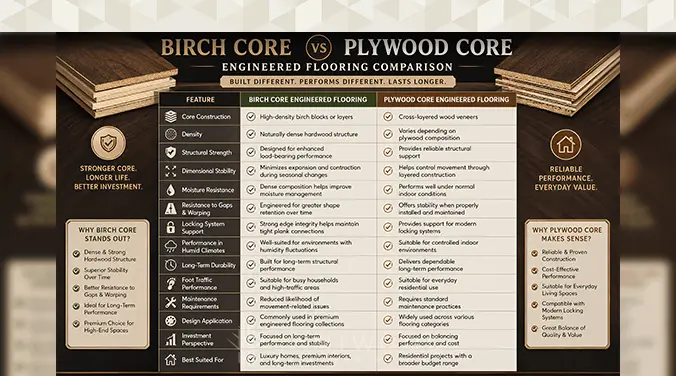
| Feature | Birch Core Engineered Flooring | Plywood Core Engineered Flooring |
|---|---|---|
| Core Construction | High-density birch blocks or layers | Cross-layered wood veneers |
| Density | Naturally dense hardwood structure | Varies depending on plywood composition |
| Structural Strength | Designed for enhanced load-bearing performance | Provides reliable structural support |
| Dimensional Stability | Minimizes expansion and contraction during seasonal changes | Helps control movement through layered construction |
| Moisture Resistance | Dense composition helps improve moisture management | Performs well under normal indoor conditions |
| Resistance to Gaps & Warping | Engineered for greater shape retention over time | Offers stability when properly installed and maintained |
| Locking System Support | Strong edge integrity helps maintain tight plank connections | Provides support for modern locking systems |
| Performance in Humid Climates | Well-suited for environments with humidity fluctuations | Suitable for controlled indoor environments |
| Long-Term Durability | Built for long-term structural performance | Delivers dependable long-term performance |
| Foot Traffic Performance | Suitable for busy households and high-traffic areas | Suitable for everyday residential use |
| Maintenance Requirements | Reduced likelihood of movement-related issues | Requires standard maintenance practices |
| Design Application | Commonly used in premium engineered flooring collections | Widely used across various flooring categories |
| Investment Perspective | Focused on long-term performance and stability | Focused on balancing performance and cost |
| Best Suited For | Luxury homes, premium interiors, and long-term investments | Residential projects with a broader budget range |
Which Flooring Core Is Best for Indian Homes?
During the Monsoon Season
Homes in humid regions can benefit from flooring with strong dimensional stability. Birch core is often preferred where humidity fluctuations are frequent.
In Air-Conditioned Apartments
Constant temperature changes can affect wood movement. Both core types perform well, but a stable core can help reduce seasonal movement.
For Independent Villas
Large open spaces and extensive flooring installations often benefit from enhanced structural stability.
For Homes With Kids and Pets
Active households place greater stress on flooring. A dense and stable core can help maintain performance over time.
For High-Traffic Families
Families with frequent activity may appreciate the long-term consistency provided by a stable flooring core.
Which Core Is Better for Different Areas of Your Home?
| Area | Recommended Consideration |
|---|---|
| Living Room | Enhanced stability for furniture and foot traffic |
| Bedroom | Both options perform well |
| Dining Area | Strong structural support is beneficial |
| Hallways | Stability becomes increasingly important |
| Luxury Homes | Premium core construction is often preferred |
| High-Traffic Spaces | Long-term durability should be prioritized |
What Do Flooring Professionals Look for in an Engineered Flooring Core?
When evaluating engineered flooring, professionals often assess:
- Core density
- Moisture resistance
- Dimensional stability
- Manufacturing quality
- Edge strength
- Long-term structural performance
Rather than focusing solely on the visible hardwood surface, flooring experts frequently view the core as one of the strongest indicators of overall flooring quality.
Birch Core vs Plywood Core at a Glance
Birch Core
✓ Dense hardwood construction
✓ Enhanced dimensional stability
✓ Strong edge support
✓ Suitable for premium installations
✓ Designed for long-term performance
Plywood Core
✓ Cross-layered construction
✓ Reliable residential performance
✓ Cost-conscious option
✓ Widely available
✓ Suitable for a wide range of applications
Which Core Should You Choose Based on Your Needs?
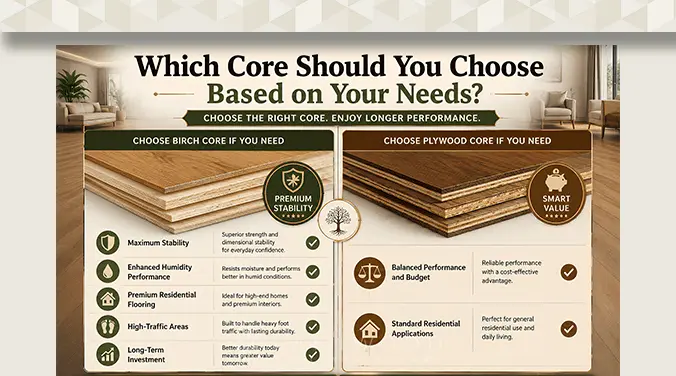
| If You Want... | Recommended Core |
|---|---|
| Maximum Stability | Birch Core |
| Enhanced Humidity Performance | Birch Core |
| Premium Residential Flooring | Birch Core |
| High-Traffic Areas | Birch Core |
| Long-Term Investment | Birch Core |
| Balanced Performance and Budget | Plywood Core |
| Standard Residential Applications | Plywood Core |
Also Read: Advantages of Birch Core Engineered hardwood Floor
Is Birch Core Flooring Worth the Higher Investment?
The answer depends on your priorities.
If your focus is on achieving a balance between performance and budget, a high-quality plywood core floor can be an excellent choice.
However, if you value long-term stability, enhanced structural performance, and reduced movement over time, investing in a premium birch core may offer additional peace of mind.
What Are Some Common Myths About Birch Core and Plywood Core Flooring?
Myth 1: All Engineered Flooring Cores Are the Same
Different materials, densities, and manufacturing methods can influence performance.
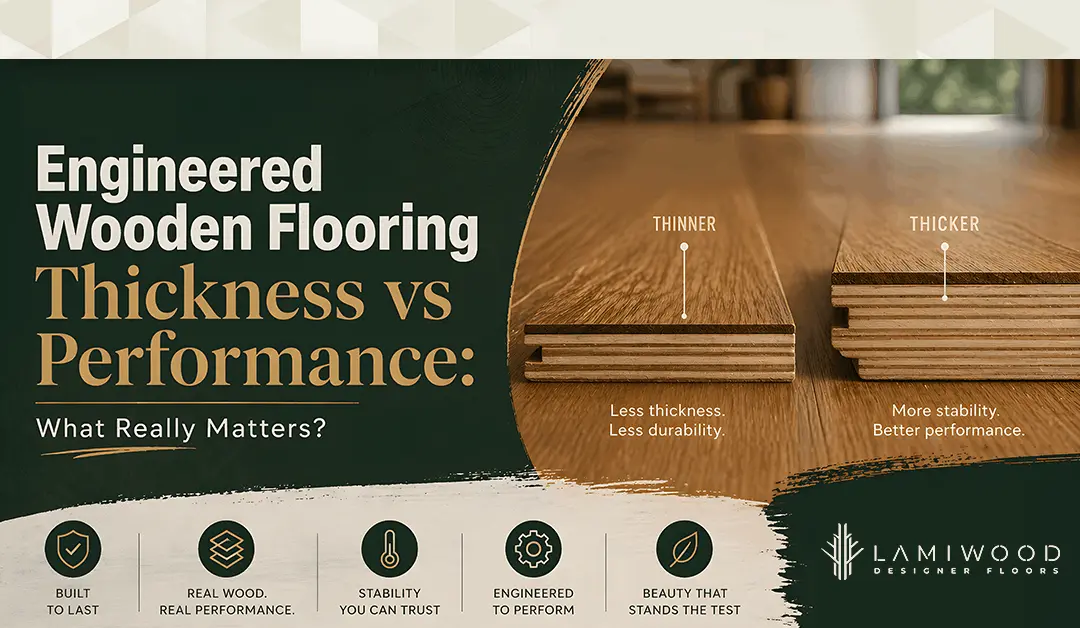
Myth 2: Thicker Flooring Automatically Means Better Quality
Core construction often matters more than overall thickness.
Myth 3: The Hardwood Surface Determines Everything
The core plays a major role in stability and durability.
Myth 4: Plywood Core Flooring Is Low Quality
High-quality plywood core flooring can provide excellent performance when properly manufactured.
Final Verdict: Which Lasts Longer?
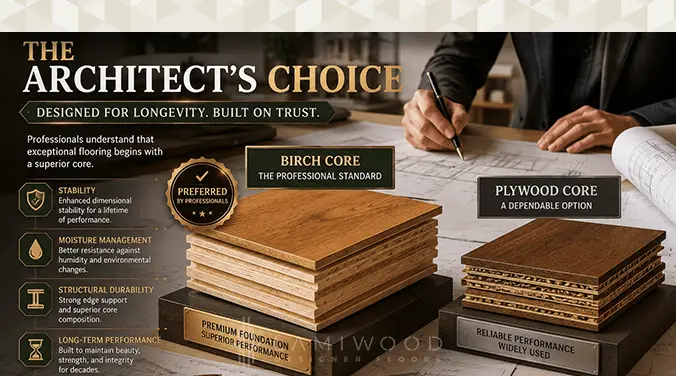
Both birch core and plywood core engineered flooring can deliver reliable performance when manufactured to high standards.
However, when long-term stability, dimensional consistency, moisture management, and structural durability are the primary goals, birch core flooring generally offers a stronger foundation.
Plywood core remains a dependable option for many residential applications and continues to be widely used across the flooring industry.
For homeowners seeking maximum longevity and long-term performance, birch core is often the preferred choice among premium flooring manufacturers, architects, and flooring professionals.
Frequently Asked Questions
Birch is generally denser and is often chosen for applications where enhanced structural stability is desired.
Birch core is frequently preferred for environments with humidity fluctuations because of its dimensional stability.
Yes. High-quality plywood core flooring can provide dependable long-term performance.
Birch is valued for its density, stability, and ability to support long-term flooring performance.
Both can perform well, but birch core is often selected when long-term durability is a priority.
For homeowners seeking premium performance and long-term value, birch core can be a worthwhile investment.
The ideal choice depends on budget, environment, and performance expectations, but birch core is often favored for its stability and long-term consistency.
For a free consultation, reach out at 91+9999500117 Or drop us an email at [email protected]