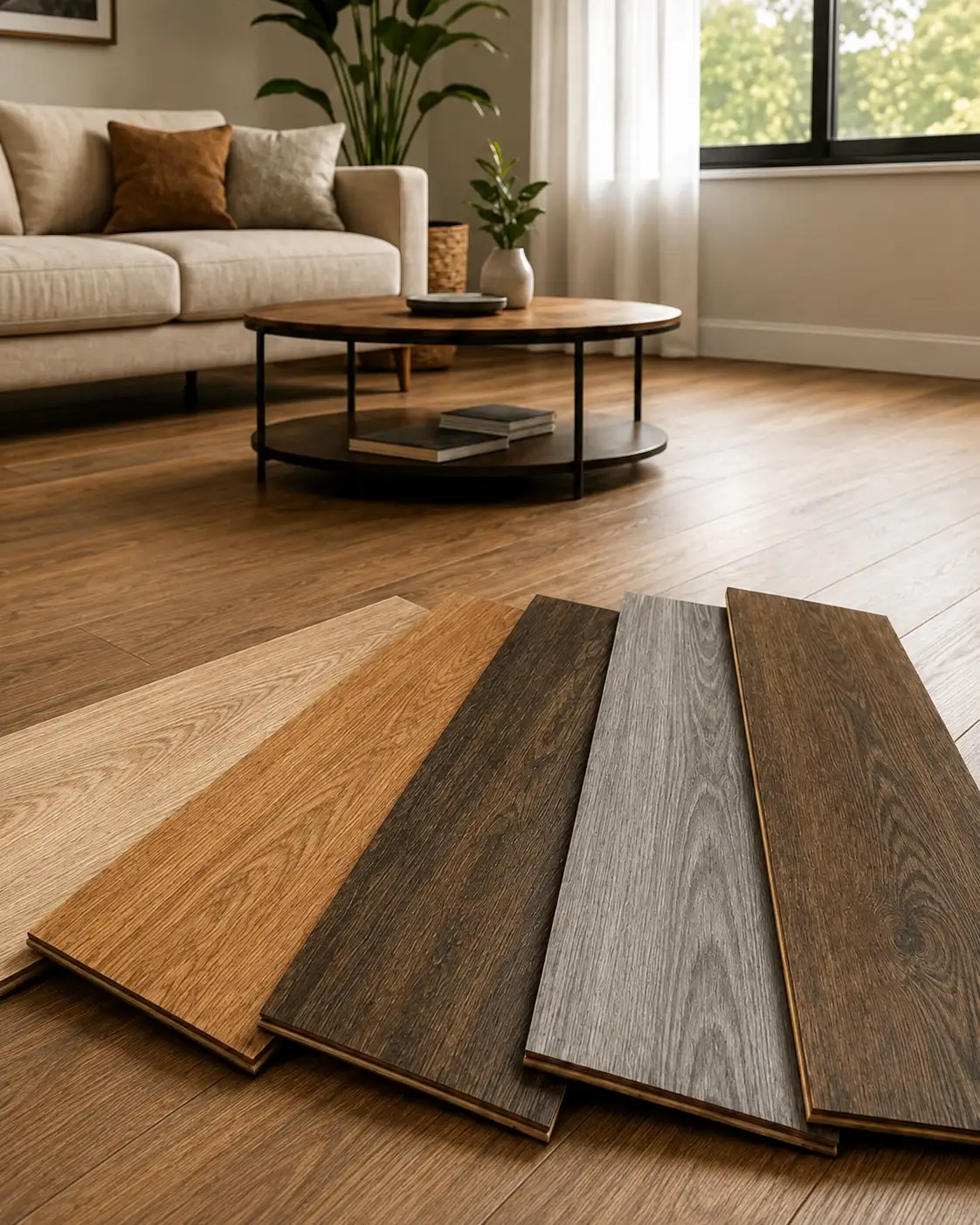



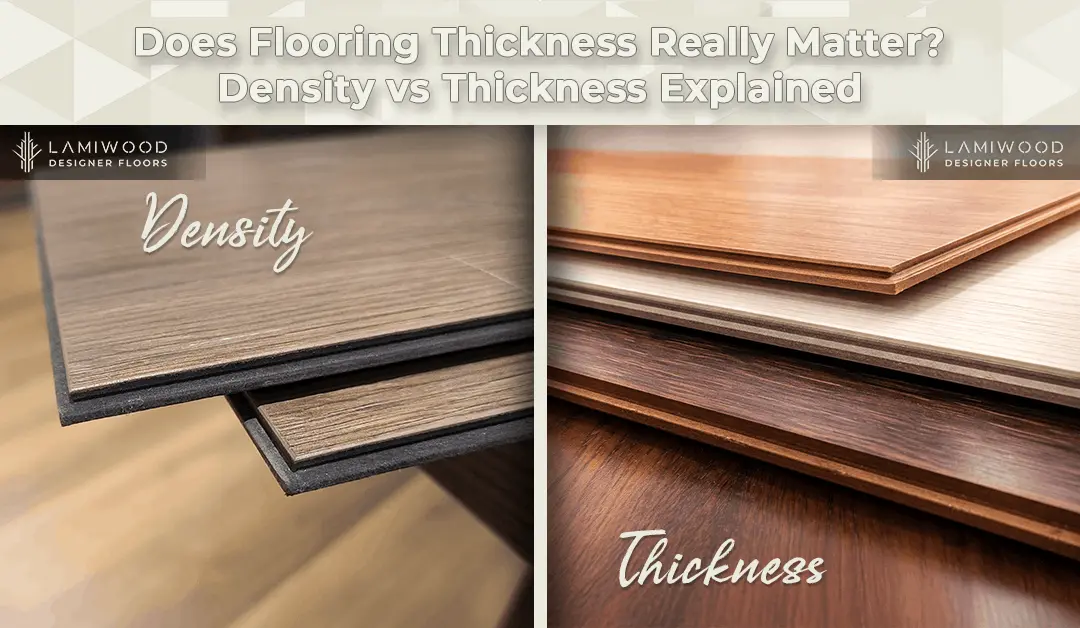
You’re staring at two flooring samples. One is 6 mm, the other is 10 mm. The salesperson says thickness is everything, your neighbor says density is what really counts, and now you’re wondering if buying flooring secretly requires an engineering degree.
Don’t worry. You’re not alone.
Flooring terminology can be confusing, but once you understand the difference between thickness and density, choosing the right material becomes a whole lot easier.
Let’s break this down in a simple, human way.
What Does Flooring Thickness Really Mean?
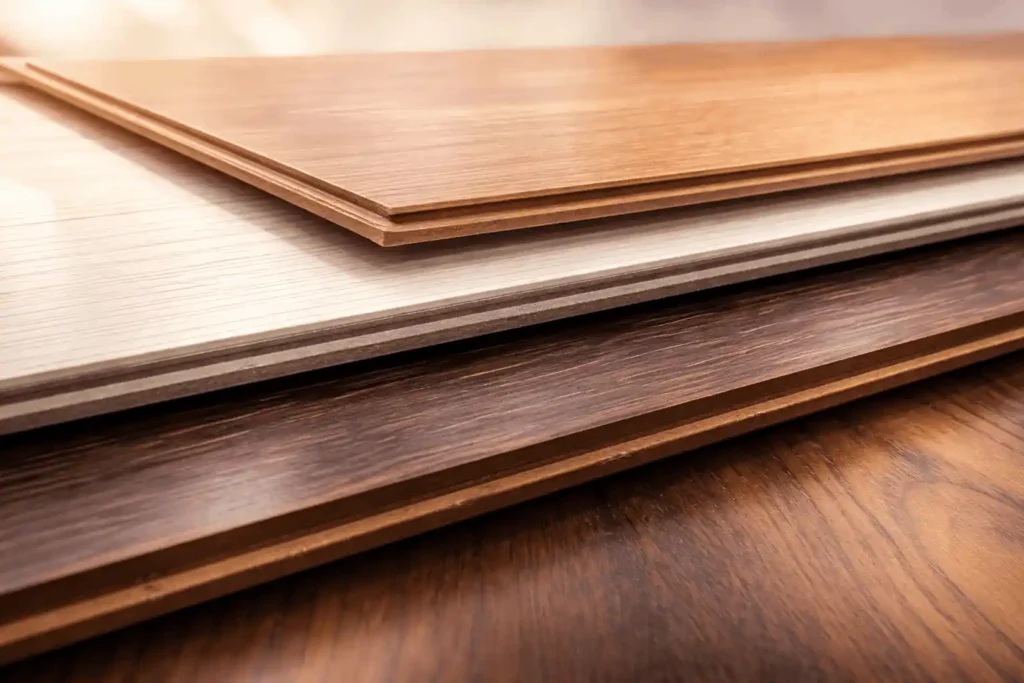
Thickness is the total height of the flooring plank or tile from the top wear layer to the backing. Depending on the type of flooring, thickness can include:
- Laminate: wear layer + design layer + dense core + backing
- Vinyl plank (LVT/LVP): wear layer + vinyl layers + SPC/WPC core + underlayment
- Engineered wood: real wood veneer + plywood layers
- Carpet: pile height + backing
Thickness is NOT the same as durability, but it does affect how your flooring feels and performs in everyday life.
Why Thickness Matters (More Than You Think)
1. Better Sound Absorption
Thicker flooring is quieter, period.
If you’ve ever heard thin vinyl click loudly under shoes, you know what I’m talking about.
If you live in an apartment, have kids sprinting around at 7 AM, or don’t want your downstairs neighbor banging a broom on the ceiling, thickness helps.
2. More Comfort Underfoot
Imagine standing in the kitchen for an hour cooking dinner.
A thicker plank has just a bit more “give,” making it nicer on your knees and feet.
Thin flooring = harder, louder, sometimes “plastic.”
Thick flooring = softer, solid, more luxurious.
3. Better for Imperfect Subfloors
Got an older home with a few dips or “wavy” spots?
Thicker laminate or vinyl bridges small imperfections better. Thin planks tend to flex, gap, or bounce.
4. Often Looks and Feels More Realistic
This is especially true for laminate and vinyl.
Manufacturers usually reserve their highest-quality textures and embossing for thicker products.
So yes, thickness does matter…but it's not the whole story.
Understanding Density (The Silent Performance Factor)
If thickness is about feel, density is about strength.
Density refers to how compact and sturdy the core of the flooring is:
- SPC vinyl → very dense, rigid, dent-resistant
- WPC vinyl → less dense, softer, more cushioned
- Laminate (HDF) → high-density fiberboard
- Engineered wood → density varies with the wood construction


Here’s the twist:
A thin, dense plank can outperform a thicker, softer one.
Density affects:
- Stability during temperature and humidity changes
- Resistance to dents (heels, dog nails, dropped objects)
- Durability over time
- Moisture handling (varies by product type)
If you have pets, kids, heavy furniture, or high-traffic areas, density becomes a big deal.
Thickness vs. Density: Which Matters More?
The honest answer?
They both matter—but for different reasons.
Here’s the quick breakdown:
Thickness helps with:
✔ Sound
✔ Comfort
✔ Hiding subfloor imperfections
✔ Better visual realism
Density helps with:
✔ Durability
✔ Long-term stability
✔ Dent resistance
✔ Moisture performance
You want a balance of both.
Quick Comparison Table
| Feature | Thickness Helps | Density Helps |
| Sound absorption | ✔️ | — |
| Comfort | ✔️ | — |
| Durability | — | ✔️ |
| Dent resistance | — | ✔️ |
| Moisture stability | — | ✔️ |
| Installation quality | ✔️ | — |
Also Read – Longevity and Durability of Wooden Flooring

Recommended Thickness by Flooring Type
Laminate Flooring
- Good: 8 mm
- Better: 10–12 mm
Thicker laminate feels more like real hardwood and absorbs sound better.
Vinyl Plank (LVP/LVT)
- SPC core: 4–6 mm
- WPC core: 6–8 mm
Pay more attention to the wear layer and core density than to thickness.
Engineered Wood
- Total thickness varies, but the veneer thickness is what matters:
- 2–3 mm = basic
- 4–6 mm = can be refinished
Carpet
Thickness here is misleading.
Density + twist matter far more for performance.
A Real-World Rule Installers Always Say
“Thickness feels better today, density lasts longer tomorrow.”
That’s the sweet spot: flooring that feels good AND holds up.
Final Thoughts

So, does flooring thickness matter?
Absolutely.
But density matters just as much, and sometimes even more.If you want flooring that feels great underfoot and holds up to real life, look for a product with a good balance of both factors.
For a free consultation, reach out at 91+9999500117 Or drop us an email at [email protected]