


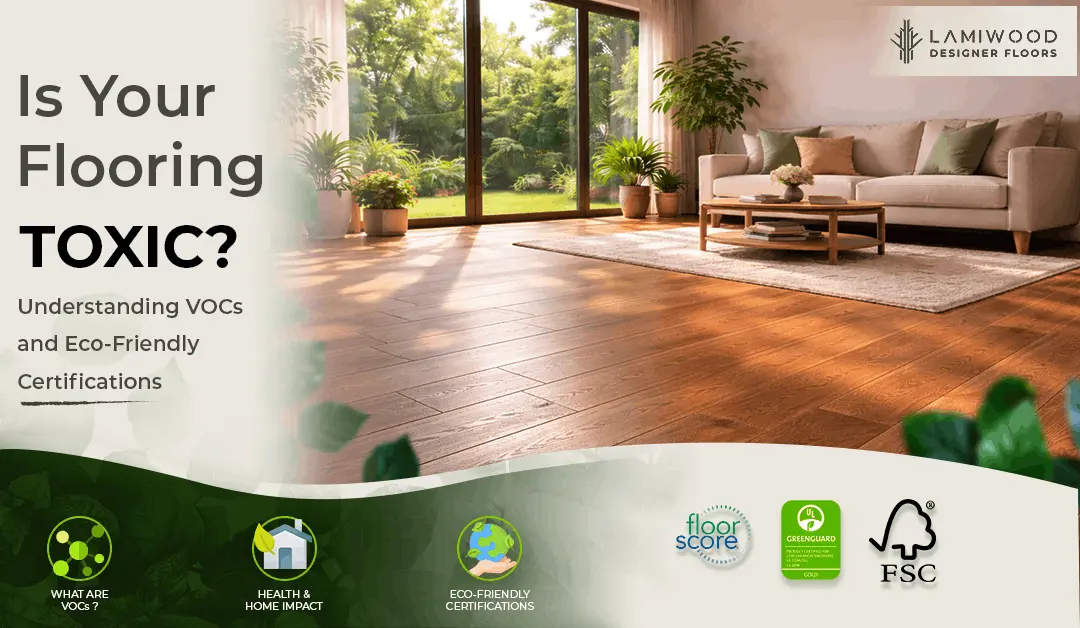
What if the floor beneath your feet is silently affecting the air you breathe every single day?
For many homes, this is not a possibility. It is already happening.
Most homeowners spend weeks choosing the perfect flooring design, color, and finish. But very few stop to ask the question that actually matters:
Is my flooring safe for my home?
Because the truth is simple. What you cannot see in your flooring often matters more than what you can.
The Hidden Problem: VOCs in Flooring
Let’s start with something most people are not aware of. VOCs, or Volatile Organic Compounds.
These are invisible chemicals commonly found in:
- Adhesives
- Surface finishes
- Synthetic flooring materials
Once installed, these compounds slowly release into your indoor air.
Why Should You Care?
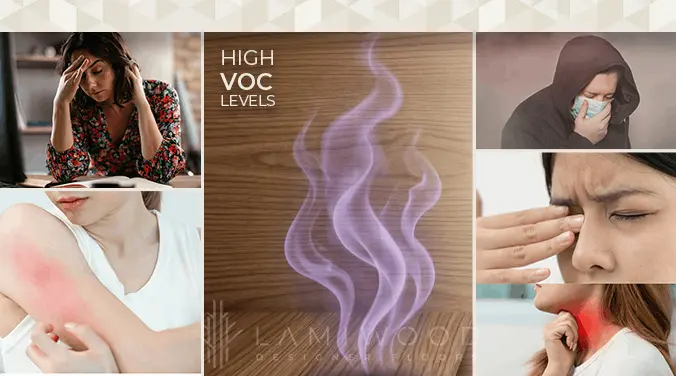
Because you do not just walk on your floor. You live on it.
Prolonged exposure to high VOC levels can lead to:
- Headaches
- Allergies
- Eye and throat irritation
- Poor indoor air quality
Here is something even more important.
Formaldehyde emissions are usually highest right after installation. This means the first few weeks and months are when your indoor air is most affected.
Imagine installing a brand-new floor that looks perfect but quietly impacts the air your family breathes every day.
Ignoring VOC levels is one of the biggest mistakes homeowners make while choosing flooring.
What Makes Flooring Truly Eco-Friendly?
Eco-friendly flooring is not just about natural materials or a good-looking surface. It is about what goes into the product and what it releases over time.
A truly eco-friendly flooring solution should:
- Be low or zero VOC
- Use responsibly sourced or recycled materials
- Be safe for kids and pets
- Offer long-term durability
Sustainability is not only about the environment; it is about creating a healthier indoor environment for everyday living.
At the premium end of the market, flooring solutions are now designed with zero VOC materials and E0-certified compositions. This sets a new benchmark for healthier living spaces.
Good flooring enhances your space. Great flooring protects your living environment.
Certifications: Your Shortcut to Trust
Almost every product today claims to be eco-friendly. That makes it difficult to know what is real and what is just marketing.
This is where certifications become important. They provide proof that a product meets strict environmental and safety standards.
Understanding E0 Certification and Why It Matters
One of the most reliable benchmarks in flooring is the E0 certification.
In simple terms:
- It ensures extremely low formaldehyde emissions
- It meets strict indoor air quality standards
- It is significantly safer than standard options
E0 vs E1: A Quick Comparison
- E1 Grade allows a limited level of emissions
- E0 Grade is designed for near-zero emissions and safer indoor environments
In many premium global markets, E0 is considered the standard for safe indoor flooring.
If you are serious about creating a healthier home, this is not something to overlook.
A Quick Reality Check
If your flooring:
- Does not clearly mention VOC levels
- Does not highlight certifications like E0
- Or avoids technical details
There is a strong chance it has not been tested to strict standards.
And in most cases, what is not mentioned is where the real problem lies.
Most homeowners unknowingly compromise on indoor air quality just to save on flooring costs.
The Biggest Myth: Eco-Friendly Means Compromise
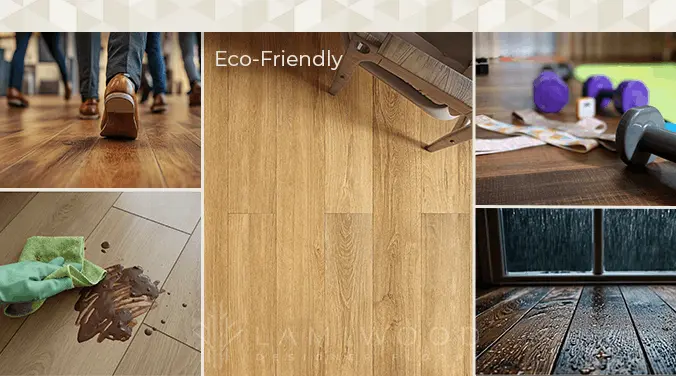
There is a common belief that eco-friendly flooring means compromising on durability or design.
That is no longer true.
Modern flooring solutions now combine sustainability with performance, offering:
- AC5-grade durability for heavy daily use
- Realistic wood textures and finishes
- Scratch and moisture resistance
- Low maintenance and long lifespan
Durability itself is a form of sustainability. The longer your flooring lasts, the less often it needs to be replaced.
Materials That Make a Real Difference
Material composition plays a major role in how eco-friendly a floor actually is.
Advanced flooring solutions today focus on:
- High-density core boards for strength and stability
- Responsibly sourced wood fibers
- Recycled materials such as wood plastic composites
Some products even use recycled wood and plastic waste, turning discarded materials into high-performance flooring while reducing environmental impact.
Indoor Air Quality: The Benefit Most People Overlook
Your flooring directly affects the air inside your home.
Eco-friendly flooring helps by:
- Reducing harmful emissions
- Minimizing dust accumulation
- Creating a cleaner indoor environment
This becomes especially important in modern homes where ventilation is often limited.
For families with children or pets, this is not a luxury. It is a necessity.
What Most Sellers Won’t Tell You
Not all flooring products are created equal.
Lower-cost options often come with hidden compromises:
- Higher VOC content due to cheaper adhesives
- Lack of credible certifications
- Inferior material quality
They may look similar at first glance, but the long-term impact is very different.
Because when it comes to flooring, what lies beneath the surface defines everything.
Also Read – Why Core Density Matters for Moisture-Resistant Flooring
How to Choose the Right Eco-Friendly Flooring
If you are planning your next flooring upgrade, keep this checklist in mind:
✔ Look for low or zero VOC levels
✔ Check for E0 or equivalent certifications
✔ Ask about material composition and sourcing
✔ Choose durable, long-lasting products
✔ Prefer low-maintenance surfaces
Before you finalize your flooring, ask about VOC levels and certifications. That one question can completely change your decision.
Final Thoughts
Eco-friendly flooring is not about following a trend. It is about making a smarter decision for your home and your health.
Because your flooring is something you interact with every single day.
So before you choose based on design alone, take a step back and ask the right questions.
Because the cheapest flooring you choose today could become the most expensive mistake tomorrow.
For a free consultation, reach out at 91+9999500117 Or drop us an email at [email protected]