


Most people buying engineered wooden flooring make one costly mistake: they focus on thickness and ignore what actually determines performance.
If you’ve been comparing options lately, you’ve probably come across engineered wood flooring thicknesses like 12mm, 14mm, or even 20mm. It sounds impressive. It feels like more should be better.
But here’s the reality, especially when it comes to engineered wood flooring thickness in India:
Thickness impresses, but construction performs.
And if you choose based on thickness alone, you might end up paying more for flooring that doesn’t last longer, feel better, or perform as you expect.
Let’s break down what really matters.
What Does Engineered Wooden Flooring Thickness Actually Mean?
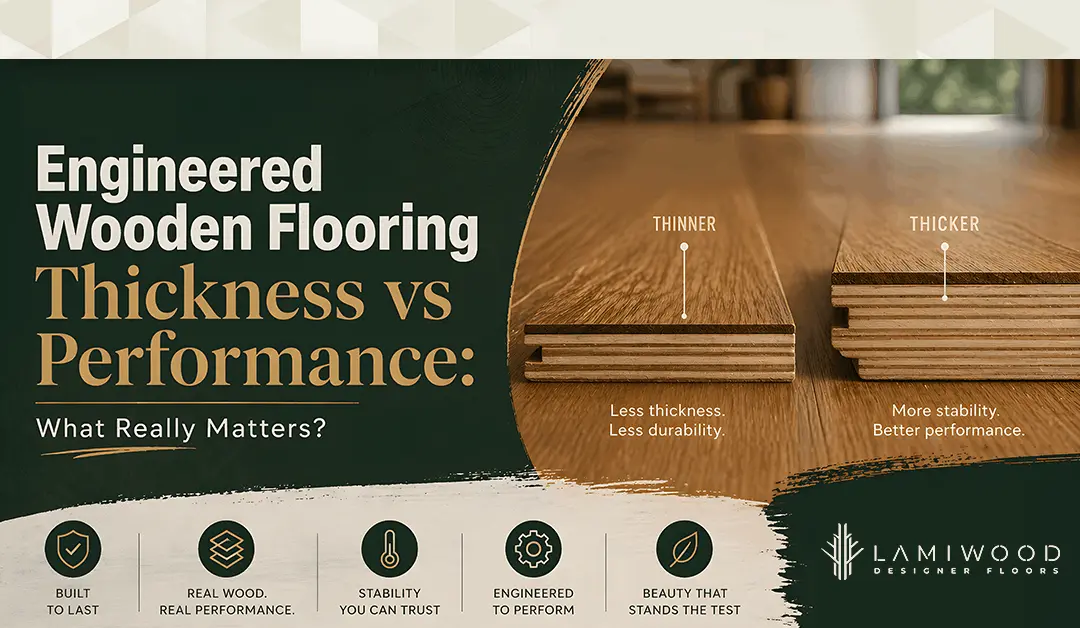
Engineered wood flooring isn’t a single piece of wood. It’s a layered construction:
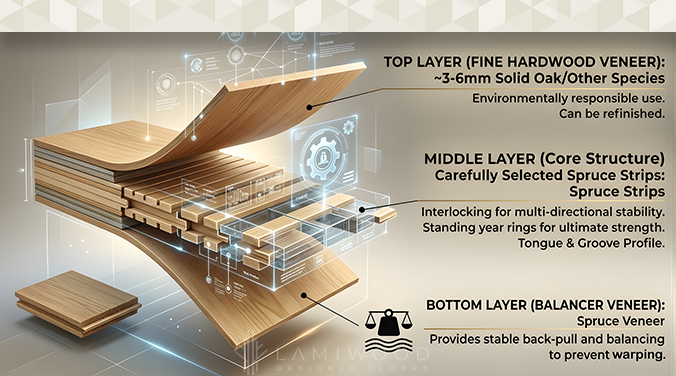
- Top layer (wear layer): Real hardwood surface
- Core layer: Plywood or high-density fiberboard (HDF)
- Backing layer: Stability support
So when you see something like 14mm engineered wood flooring, it includes all these layers combined.
But here’s where most buyers get misled and where brands quietly oversell thickness:
Not all layers contribute equally to performance.
The Real Game-Changer: Wear Layer Thickness
If you’re trying to figure out the ideal thickness for engineered wooden flooring, this is where your focus should be.
The wear layer thickness is the top hardwood layer, the part you actually walk on.
Why it matters:
- Determines how long your flooring will last
- Impacts resistance to scratches and wear
- Defines how many times it can be sanded and refinished
A practical benchmark:
- 2–3 mm: Basic residential use
- 3–4 mm: Good durability for standard homes
- 4–6 mm: Premium performance and longevity
At Lamiwood Designer Floors, we’ve seen this play out repeatedly. Clients often invest in thicker boards, assuming better performance, but when the wear layer is compromised, the floor starts showing signs of aging much earlier.
In most real-world cases, premature flooring wear comes from a weak surface layer, not insufficient thickness.
The Biggest Myth: “Thicker is Better”
This is where most buyers go completely wrong.
Let’s clear it up.
What total thickness actually affects:
- Structural stability
- Sound insulation
- Installation compatibility
What it does not affect:
- Surface durability
- Scratch resistance
That’s controlled almost entirely by the wear layer.
A 20mm board with a thin wear layer can wear out faster than a 14mm board with a strong, high-quality surface.
Think of it like a mattress; thickness alone doesn’t guarantee comfort. What’s inside matters more.
Stability: Where Construction Beats Thickness
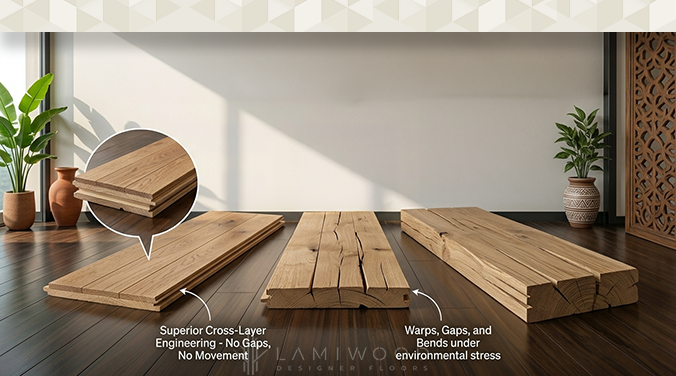
One of the biggest advantages of engineered wooden flooring is its ability to handle temperature and humidity changes, especially important in Indian conditions.
But here’s the truth:
Stability doesn’t come from thickness; it comes from how well the flooring is engineered.
- High-quality plywood cores with cross-layer construction offer superior stability
- Poorly manufactured thick boards can still warp or bend
- Balanced construction always outperforms bulk
We’ve seen homes where a 14mm engineered floor with a 4mm wear layer still looks and performs like new after years, while thicker, poorly built options begin to show gaps, movement, or wear much earlier.
Installation: Choosing the Right Thickness for Your Space
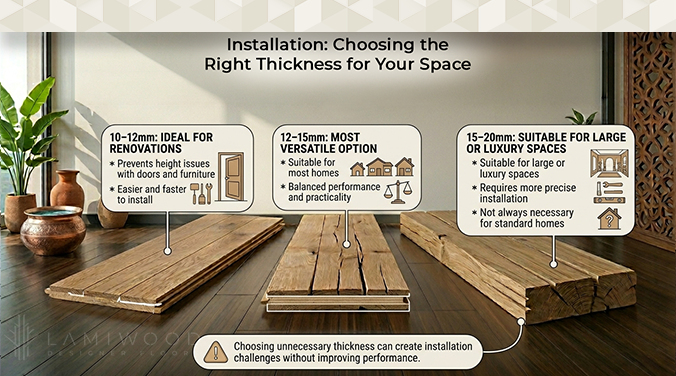
Thickness also affects how your engineered flooring is installed, and this is where practical decisions matter.
10–12mm:
- Ideal for renovations
- Prevents height issues with doors and furniture
- Easier and faster to install
12–15mm:
- Most versatile option
- Suitable for most homes
- Balanced performance and practicality
15–20mm:
- Suitable for large or luxury spaces
- Requires more precise installation
- Not always necessary for standard homes
Choosing unnecessary thickness can create installation challenges without improving performance.
How Your Floor Feels Matters Too
Performance isn’t just technical, it’s experiential.
A well-constructed engineered floor feels:
- More solid underfoot
- Less hollow when you walk
- Noticeably more premium
Yes, thickness contributes to this, but so does:
- Underlay quality
- Installation precision
Because a floor isn’t just something you walk on, it’s something you experience every single day.
Moisture Resistance: Another Common Misconception
Many assume thicker flooring handles moisture better.
That’s not entirely accurate.
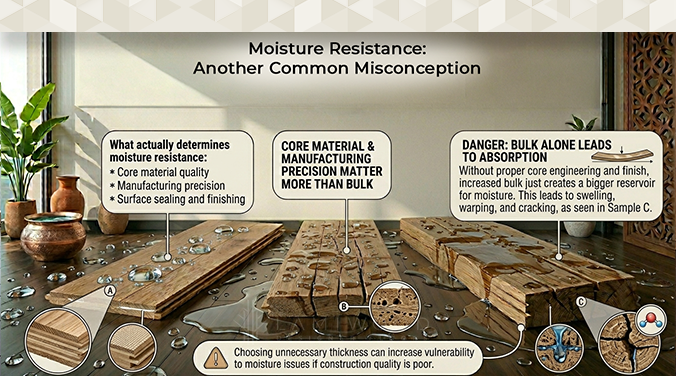
What actually determines moisture resistance:
- Core material quality
- Manufacturing precision
- Surface sealing and finishing
In Indian environments, where humidity can fluctuate, construction quality plays a far bigger role than total thickness.
A well-engineered 12mm board can outperform a poorly made 18mm one without question.
Real-Life Recommendations
Here’s a quick guide to help you choose the best engineered wood flooring thickness based on your needs:
Apartments & standard homes:
- 12–15mm thickness
- 3–4mm wear layer
- Balanced durability and cost
High-traffic homes (kids, pets, guests):
- 14–16mm thickness
- 4–6mm wear layer
- Better long-term performance
Luxury villas & large spaces:
- 15–20mm thickness
- Premium feel and longevity
Renovation projects:
- 10–12mm thickness
- Avoids structural adjustments
- Easier installation
Also Read: How To Install Engineered Hardwood Floors
The Costly Mistakes Most Buyers Make
Even today, most flooring decisions are driven by what sounds premium.
Here’s where things go wrong:
- Choosing thickness over wear layer quality
- Ignoring core construction
- Overpaying for specs that don’t impact performance
- Not considering actual usage and environment
These mistakes don’t show immediately, but they show over time.
What Actually Matters (Quick Reality Check)
If you want to make the right decision, focus on:
- Wear layer thickness (top priority)
- Core construction quality
- Installation suitability
- Climate compatibility
- Brand reliability
Thickness alone? Just a number.
Final Thought: Ask a Smarter Question
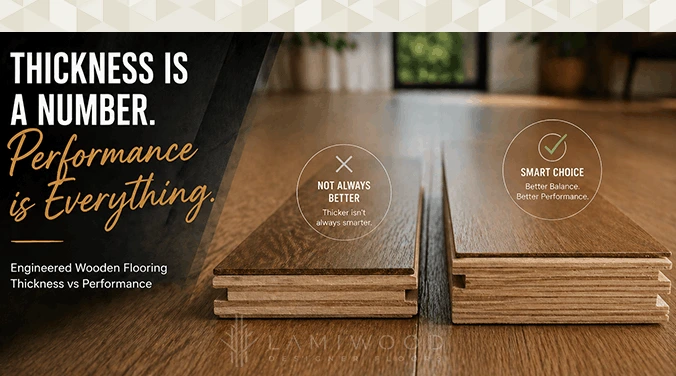
When comparing options, don’t just ask:
“What is the thickness of this flooring?”
Ask:
“What is the ideal thickness for engineered wooden flooring for my space, and how well is it built?”
That one shift can help you avoid costly mistakes and choose flooring that performs for years, not just looks good on day one.
Thinking of Making the Right Choice?
If you’re evaluating engineered wood flooring and want clarity on what will actually work for your space, not just what looks impressive on paper, getting the right guidance early can make all the difference.Because in the end, the best flooring decision isn’t the thickest one, it’s the smartest one.
For a free consultation, reach out at 91+9999500117 Or drop us an email at [email protected]